
 雷科技
雷科技




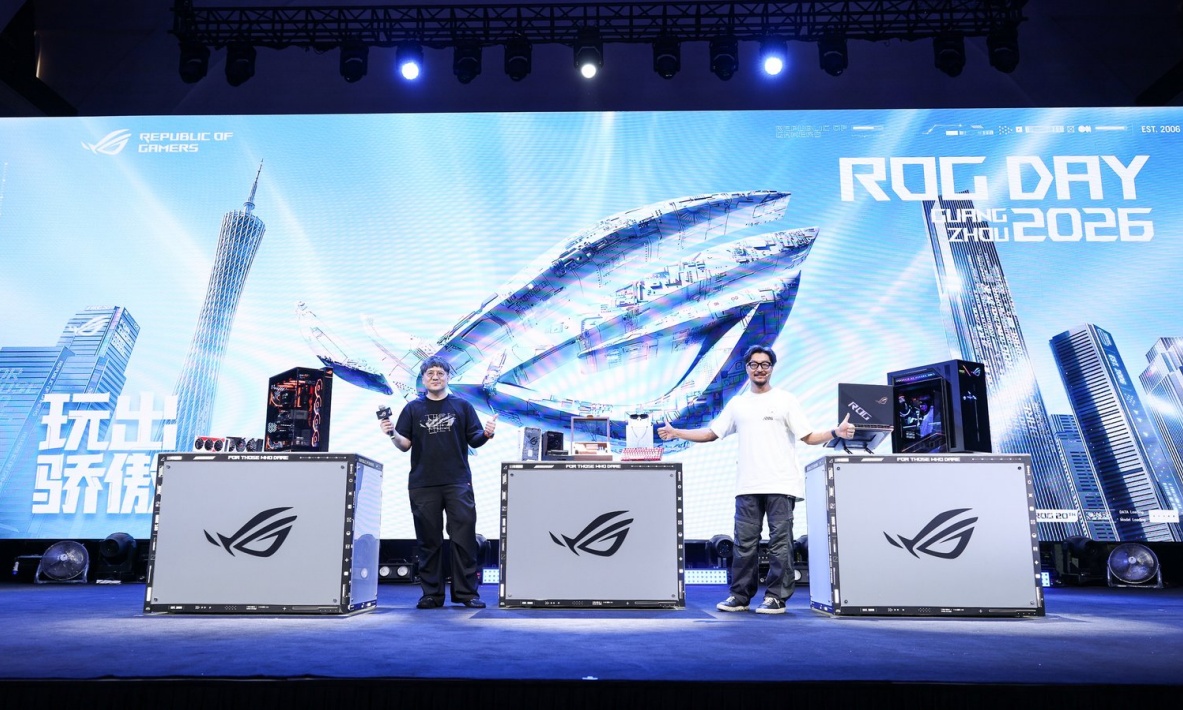

The gaming laptop market hasn’t had any truly exciting news for quite some time.
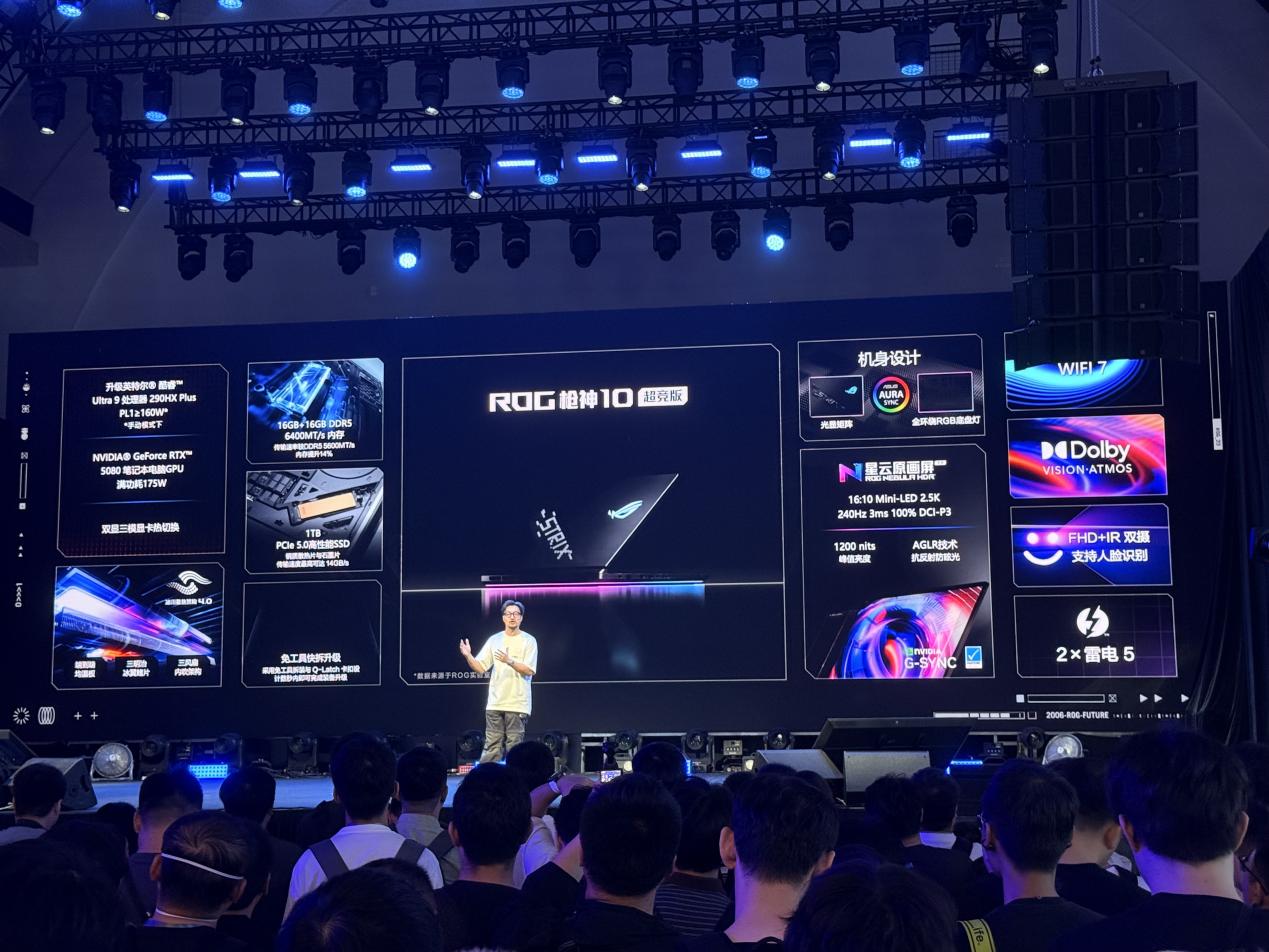
Over the past two years, high-end esports laptops have seemingly settled into a state of “refined mediocrity”: you know they’ll be more powerful, yet you’re equally certain they represent only incremental, generational upgrades over their predecessors. That changed at ROG DAY 2026, when the Strix G10 Plus Ultra Edition boldly announced its 320W total core power draw—finally reminding everyone that the technological ceiling of this market is still far from being reached.
This year marks ROG’s 20th anniversary. At the annual ROG DAY 2026 event, the brand brought its entire product lineup to Guangzhou: gaming laptops, motherboards, NUCs, graphics cards, peripherals, AR glasses—and even a co-branded road bicycle. The sheer scale made it feel less like a conventional brand launch and more like an annual “showcase of muscle.” LeiTech was invited to attend the event in person.
Strix G10 Series: 320W Marks a Watershed
Spec wars in the gaming laptop industry have raged for years—but the 320W total core power draw unveiled by the ROG Strix G10 Plus Ultra Edition still triggered a palpable surge of excitement on-site.
A quick comparison makes the leap clear: last-generation flagships typically delivered stable performance around 200W. At 320W, this laptop effectively brings desktop-class thermal headroom into a notebook form factor.
Enabling this figure is ROG’s all-new Glacier Cooling Architecture 4.0. Its triple-fan internal-blow design, upgraded dust-resistant fans, and thicker vapor chamber covering critical components are familiar enhancements. What’s truly noteworthy, however, is the evolution of liquid metal application: This generation features a four-step precision liquid metal process—plasma ultra-clean adhesion, precise crystal confinement barriers, triple ultra-precision spraying, and photorealistic pressure testing—designed to fundamentally resolve long-term stability concerns associated with liquid metal use.
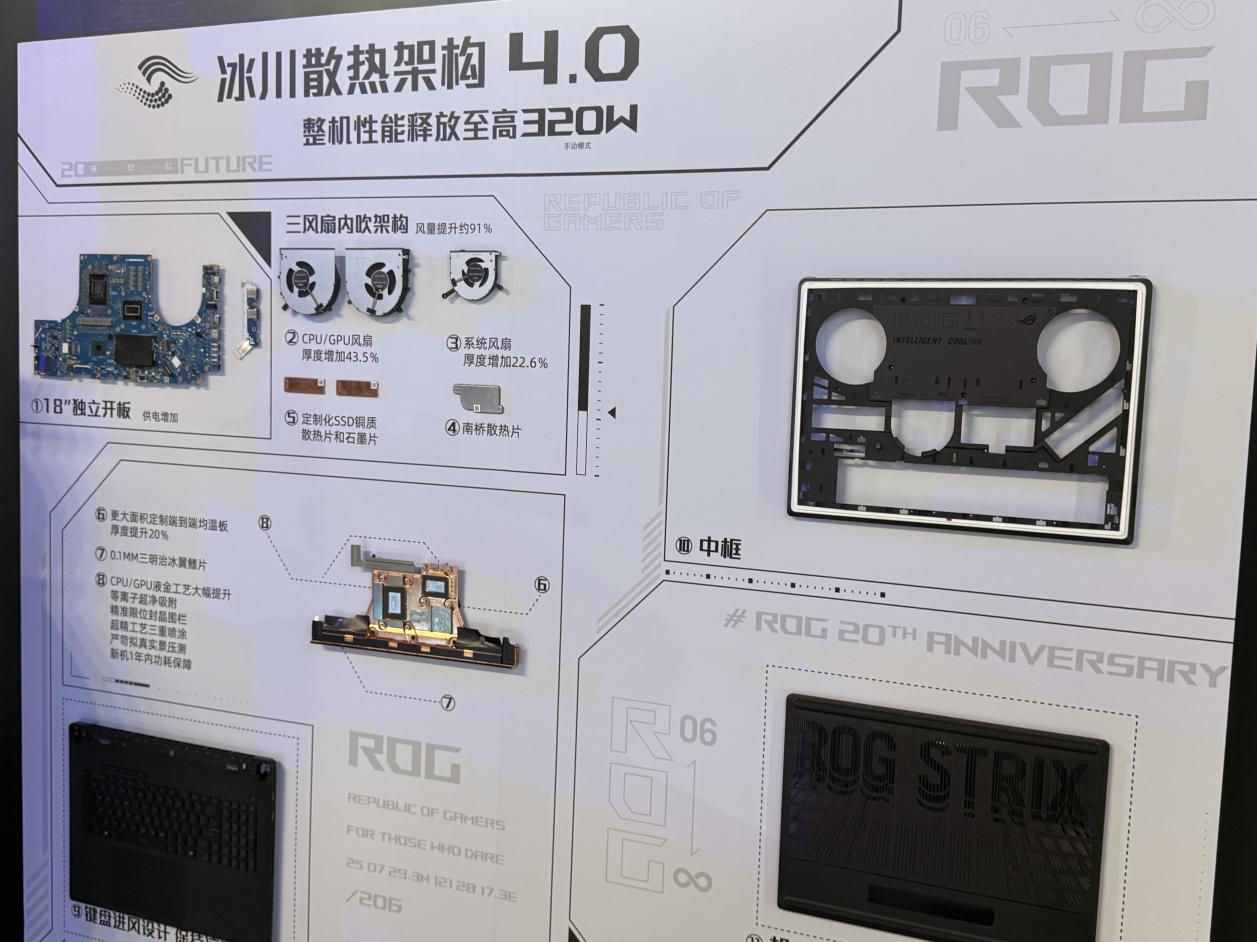
This has long been the Achilles’ heel of liquid metal solutions—and ROG directly confronts it head-on in this generation.
On the hardware front, the flagship configuration pairs the Intel Core Ultra 9 290HX Plus processor with the NVIDIA GeForce RTX 5090 Laptop GPU, supporting up to 128GB of DDR5-6400 memory and an 8TB PCIe 5.0 SSD. The 18-inch variant features a 4K 240Hz MiniLED Nebula Original Art Display 3.0, peaking at 1600 nits brightness, certified under VESA ClearMR 11000, and equipped with ROG ELMB anti-motion blur technology.
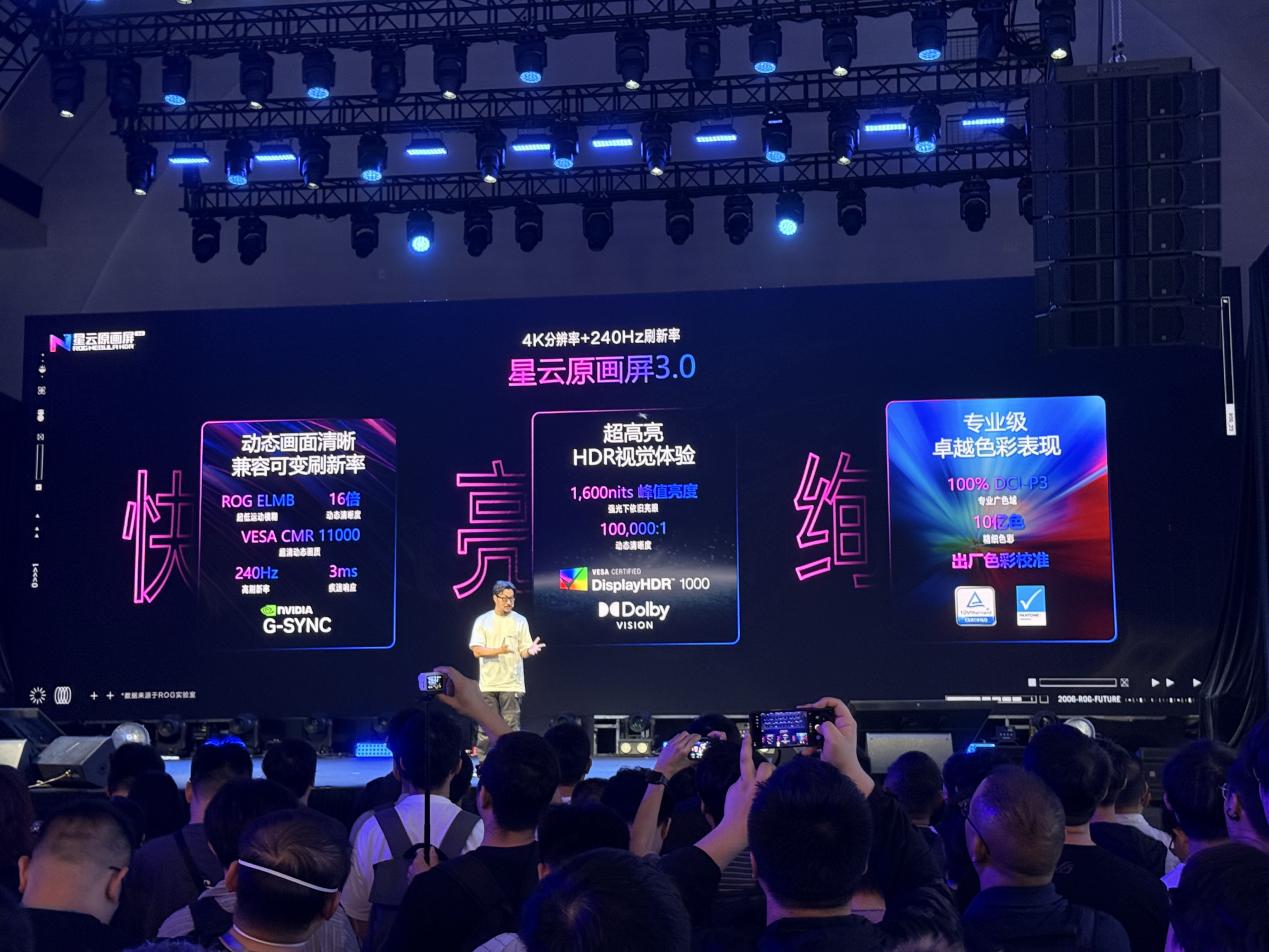
In other words, the display specifications of this laptop now match—or even surpass—those of professional esports monitors.
The standard Strix G10 also warrants attention—especially the RTX 5070 variant with optional 12GB VRAM. For users aiming to run local AI large language models on laptops, 12GB of VRAM represents a tangible threshold. ROG is clearly expanding the user base of this product intentionally—from pure esports enthusiasts to creators working at the intersection of AI and content production.
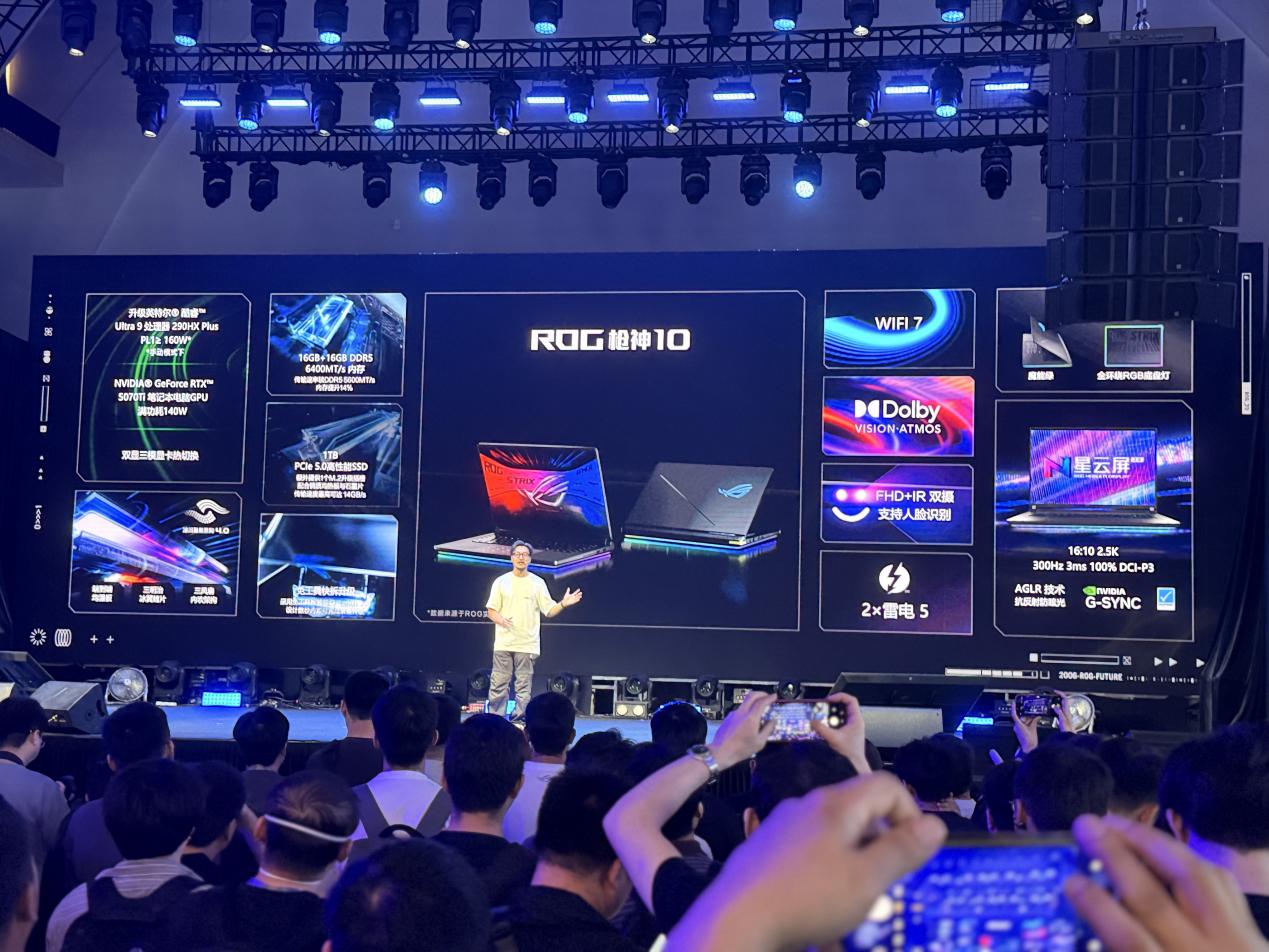
The ROG Scar series plays the role of broadening market reach downward. The Scar G10 features the AMD Ryzen 9 9955HX3D with a massive 144MB cache—leveraging 3D-stacked cache advantages for competitive online gaming. Meanwhile, the new Scar Neo Core i-Series 2026 delivers entry-level accessibility for price-sensitive users, powered by the RTX 5060 and a 220W total power draw. The Ultra Edition targets the flagship segment; the standard Strix G10 serves the mainstream high-end; and the Scar series anchors the mid-tier market.
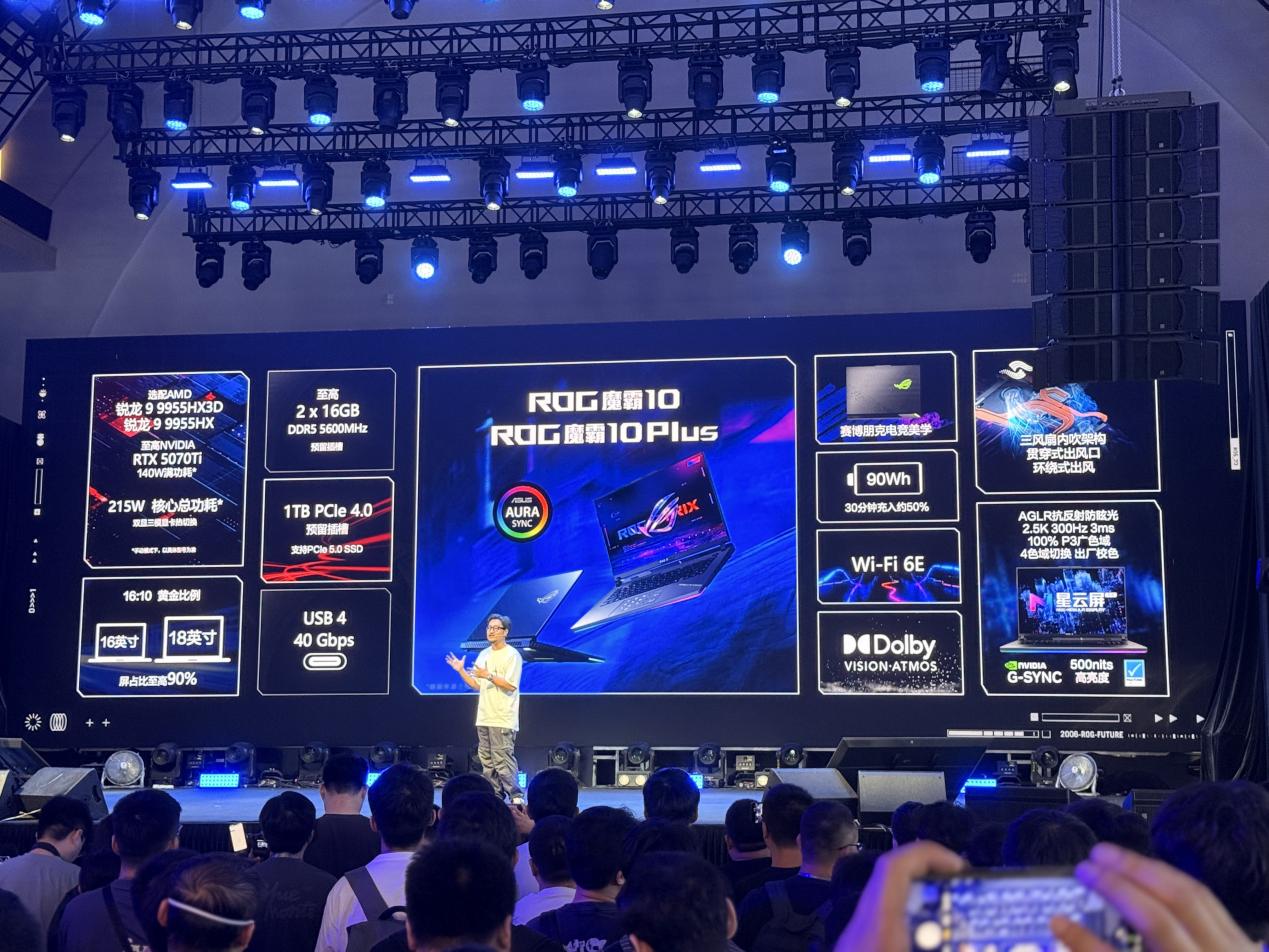
One detail underscores ROG’s current market assessment: the Strix G10 Ultra Edition retains the AniMe Vision light matrix on its lid—a customizable animated LED display—embodying ROG’s philosophy that buyers need not sacrifice aesthetics for raw performance. Additionally, dual Thunderbolt 5 ports signal ROG’s view that this machine’s users extend beyond gamers to include heavy-duty content creators who require multi-monitor setups and ultra-fast data transfer.
Retro Motherboard & NUC: Expressions of PC Faith—Old and New
If the Strix G10 represents ROG’s offensive frontline, then the CROSSHAIR 2006 Retro Edition motherboard is the most emotionally resonant product unveiled at this event.
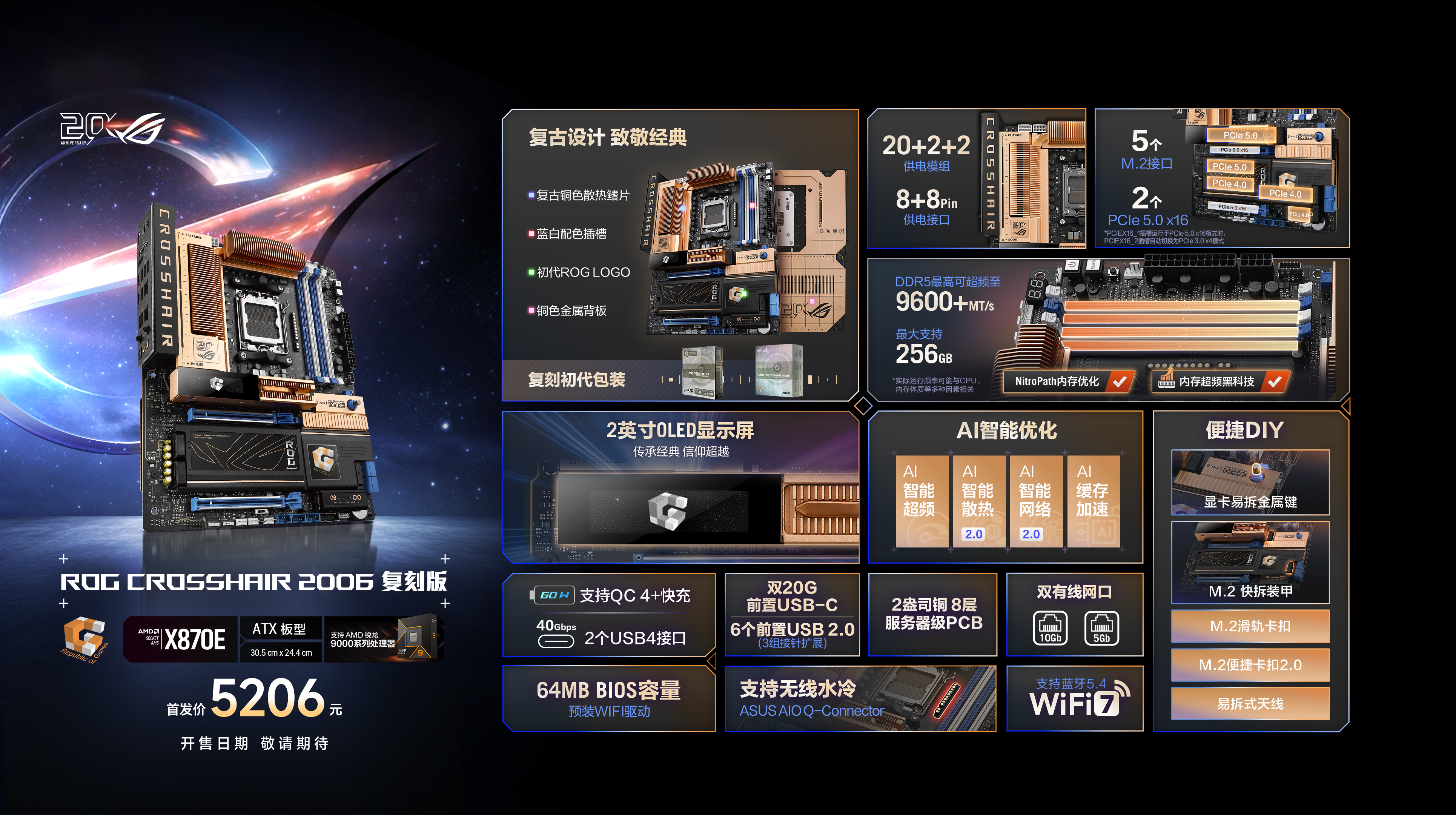
Motherboards are among the most spec-dense—and least nostalgia-friendly—hardware categories. Yet ROG deliberately flips the script: copper-toned main color scheme, blue-and-white slot accents, the original ROG logo, a copper-colored metal backplate—even the packaging faithfully replicates the original design.
More crucially, the M.2 heatsink features a 2-inch OLED display that, upon boot, first plays an animation alternating between vintage and modern ROG logos before switching to real-time system information.
This is a restrained yet precisely calibrated design decision. While small OLED displays aren’t novel per se, embedding one into a retro-themed, tribute-oriented product adds undeniable ceremonial weight—veteran users seeing that boot animation will likely feel an immediate emotional connection.
Of course, ROG isn’t selling pure nostalgia. The CROSSHAIR 2006 Retro Edition rests on a robust foundation: a 20+2+2-phase (110A) VRM, 2-ounce copper 8-layer server-grade PCB, DDR5-9600 overclocking support, dual wired networking (10G + 5G), dual USB4 40Gbps ports, and native support for AIO Q-Connector wireless liquid cooling—enabling direct, cable-free pairing with the ROG Ryujin III 420 wireless AIO cooler, eliminating cable clutter entirely. Priced at ¥5,206, it’s both a collectible and a fully functional flagship motherboard.
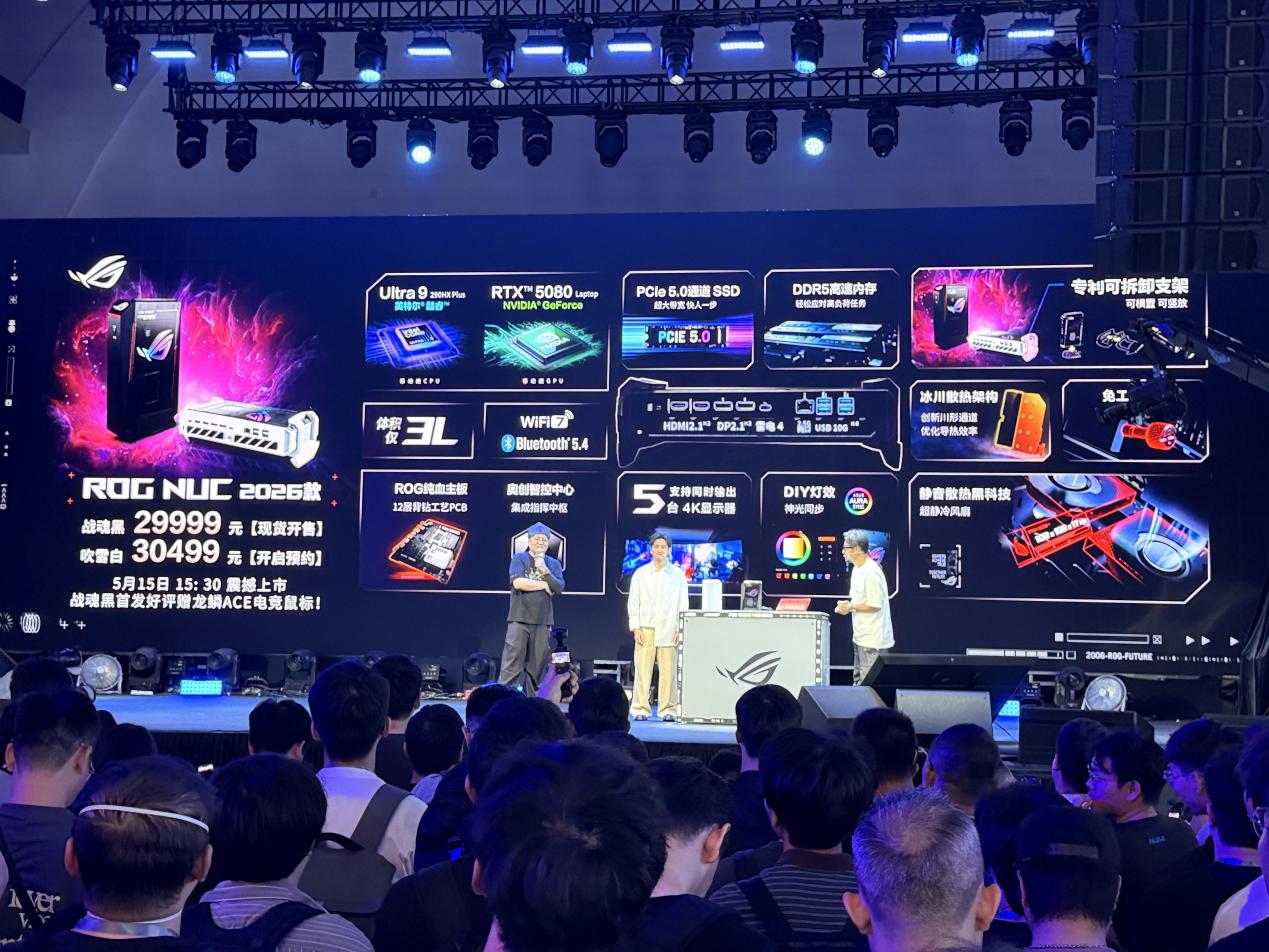
Within ROG’s DIY ecosystem, another notable newcomer is the ROG NUC 2026. Its biggest usability fix addresses a longstanding pain point: a detachable base. Unlike the previous generation—which couldn’t lie flat—the new model supports both horizontal and vertical orientations via its removable stand, with improved thermal performance in horizontal mode.
Specifications-wise, the ROG NUC 2026 packs the Intel Core Ultra 9 290HX Plus CPU and RTX 5080 GPU, powered by a new 380W PSU. A compact mini-PC delivering near full-size high-end desktop performance—this makes the NUC platform increasingly compelling for users constrained by desk space but unwilling to compromise on capability. The white “Snowy White” edition stole the spotlight at the event and is available for pre-order at ¥30,499.
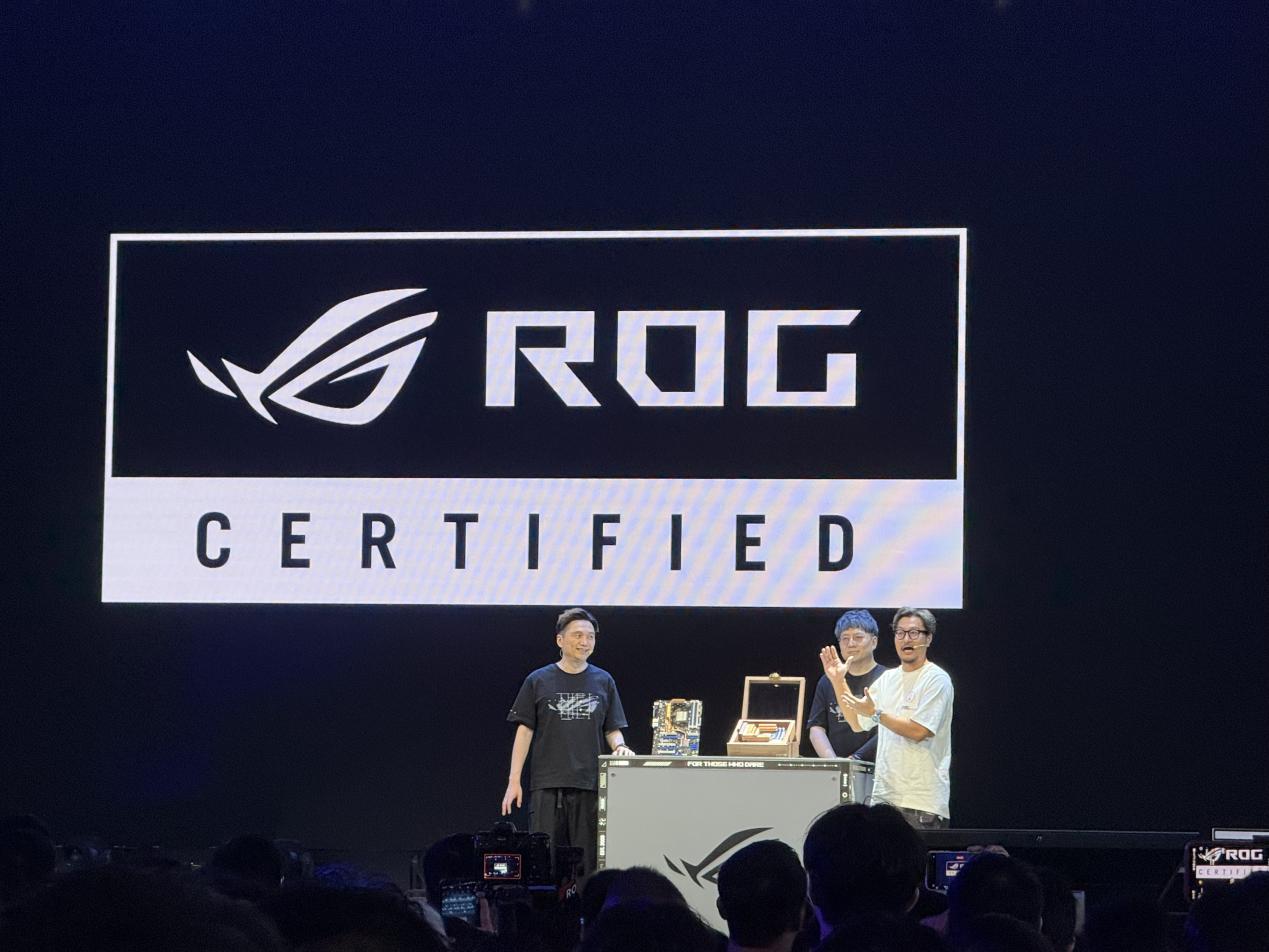
Also unveiled were the ROG TUF Gaming DDR5 20th Anniversary Memory Kits: featuring Hynix M-DIE ICs, ultra-low latency 6000 CL26 timing, and a premium 48GB capacity—priced at ¥5,999 for enthusiasts. Additionally, ROG launched its ROG Certified memory ecosystem, developed in collaboration with 14 leading memory brands.
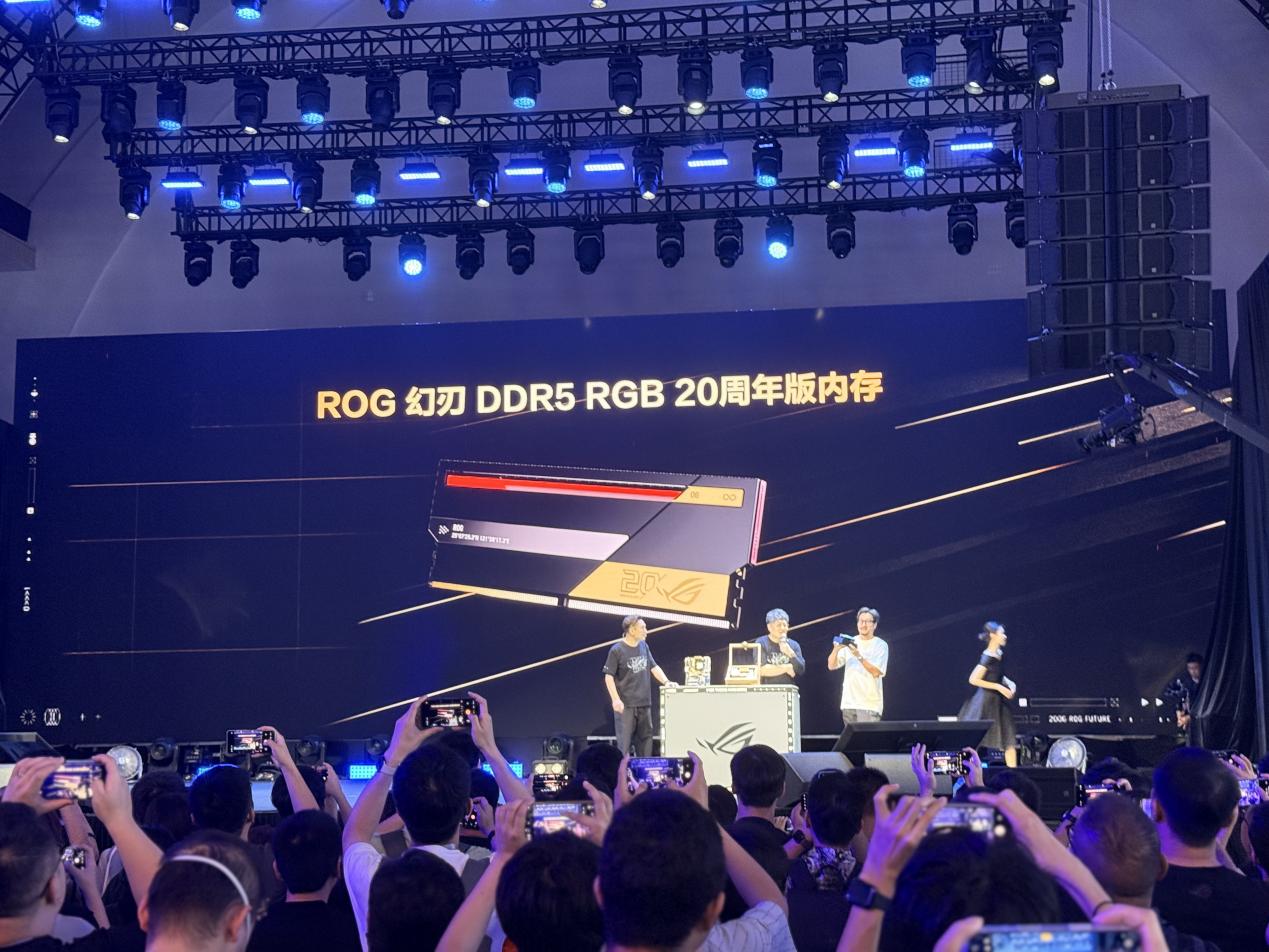
What ROG is building is a comprehensive DIY certification framework—from motherboards and memory to liquid coolers—establishing “ROG motherboard + ROG-certified memory + ROG cooler” as a trusted, closed-loop solution for DIY builders.
AR Glasses: ROG Plays an Ecosystem Card
The ROG XREAL R1 AR glasses generated the highest non-PC discussion buzz at this event—deserving special mention.
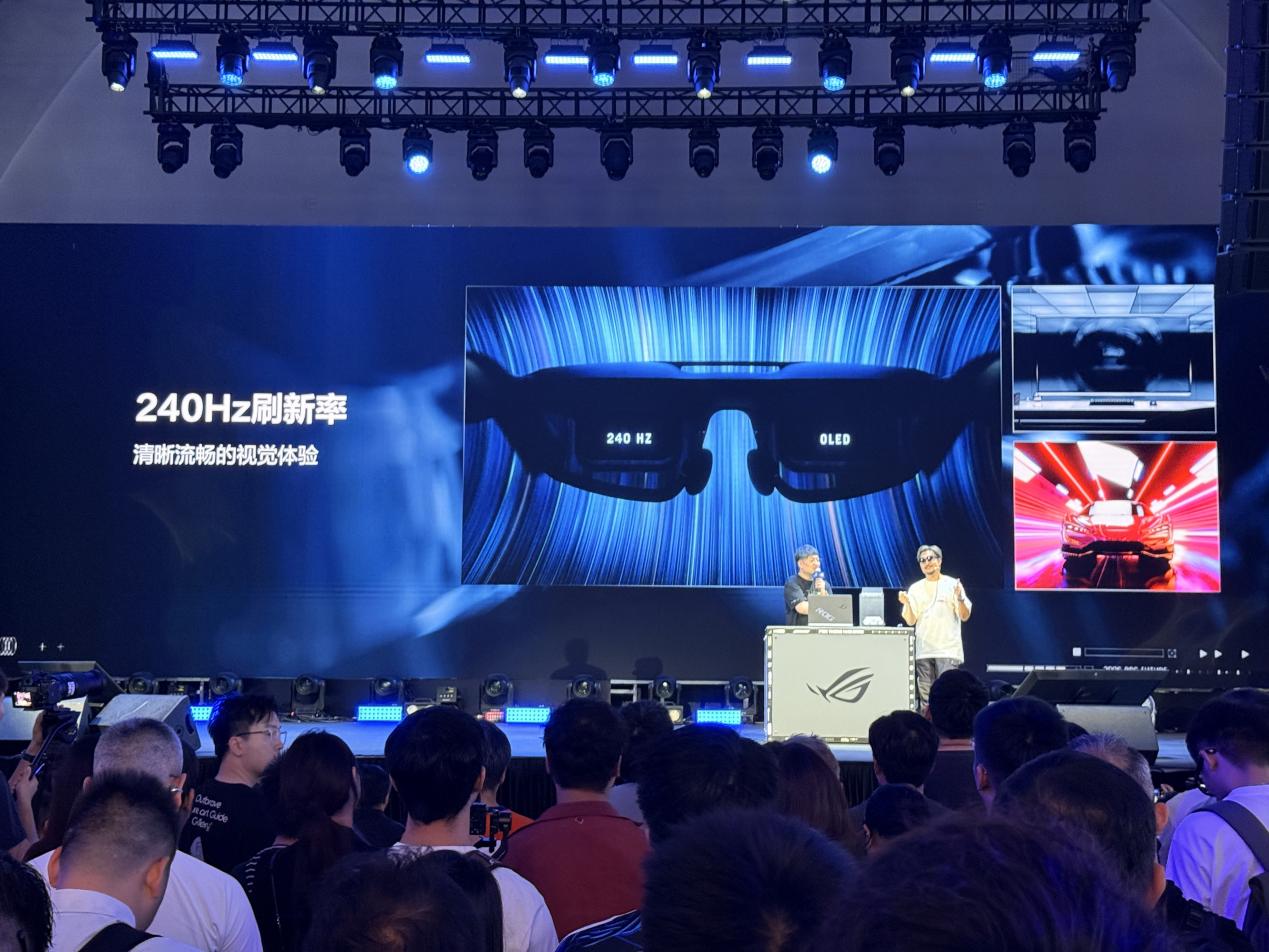
From a specs perspective, every specification is meticulously tuned for gaming: a 240Hz MicroOLED refresh rate, a virtual 171-inch display (at a 4-meter viewing distance), 0.01ms response time, native 3DoF anchoring, real-time 2D-to-3D conversion, and an ultra-lightweight 91g total mass.
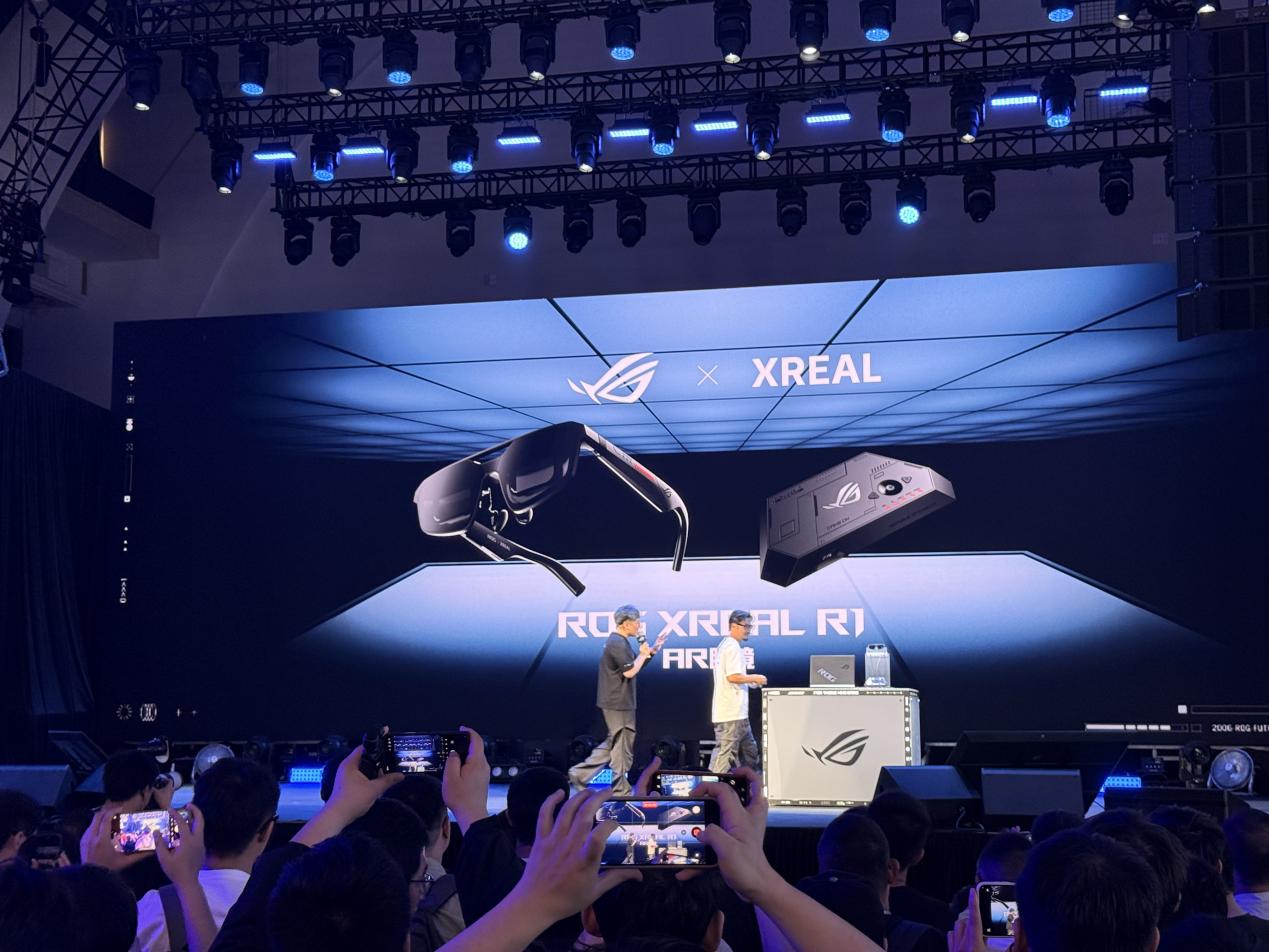
ROG positions it as a portable giant-screen gaming device, co-developed with XREAL—the world’s highest-volume AR glasses manufacturer—with audio engineered by Bose and industrial design certified by the Red Dot Award. Launching at ¥5,999, official sales begin June 12.
Yet the true rationale behind including AR glasses at an ROG event lies in ecosystem expansion.
Connected directly to the ROG XBOX handheld console X via USB-C, the AR glasses enable instant access to a 171-inch immersive gaming screen anytime, anywhere. Paired with the dedicated ROG controller—supporting DisplayPort 1.4 and dual HDMI 2.0 outputs—it seamlessly bridges PC and console gaming environments. ROG is constructing a mobile gaming ecosystem where screens are omnipresent—and these AR glasses serve as its primary display endpoint.
Naturally, market adoption remains to be validated. The AR glasses category is still in its user-education phase, and ¥5,999 is no trivial entry barrier. Moreover, long-wear comfort remains an industry-wide challenge. Whether ROG can successfully extend its esports ethos into the AR domain poses a far more complex question than any technical specification.
Other “Bombs”
Beyond these headline acts, ROG detonated a dense array of co-branded and lifestyle products—worth highlighting.
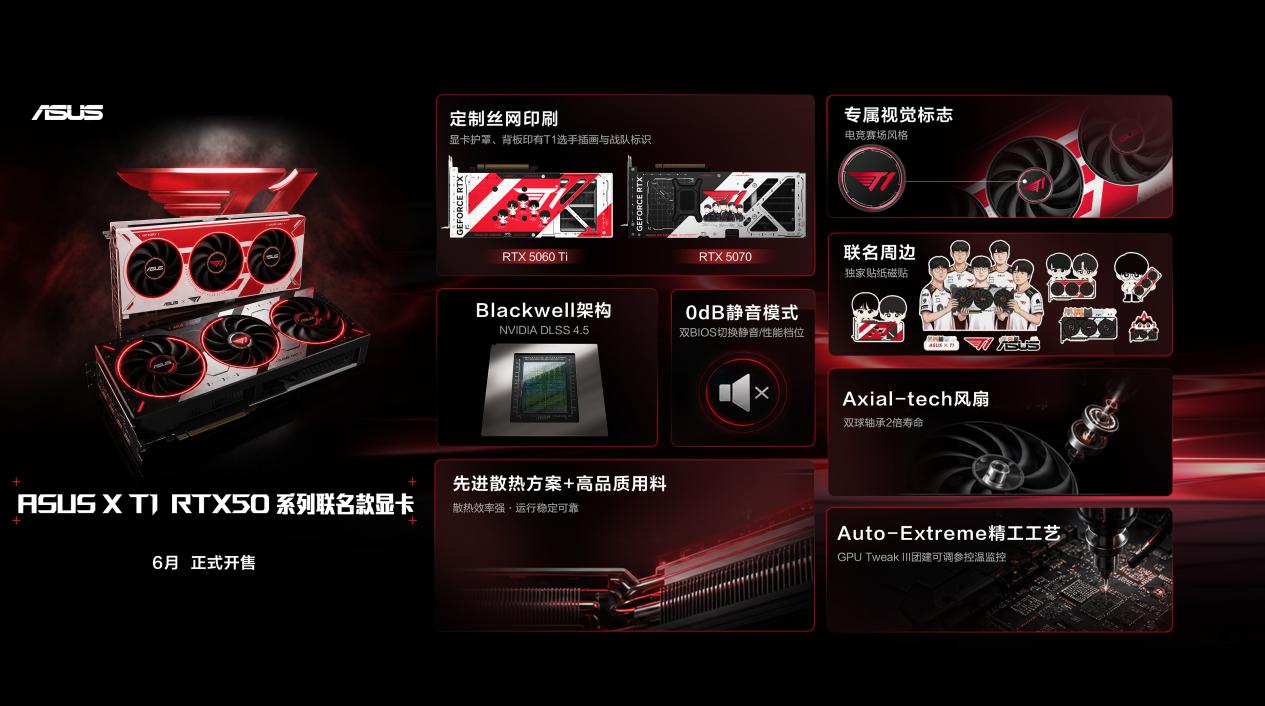
In the GPU segment, ASUS partnered with T1—the reigning League of Legends World Champions—to launch two co-branded graphics cards: the RTX 5070 and RTX 5060 Ti. The RTX 5070 version adopts a black-and-white color scheme, featuring high-fidelity hand-drawn illustrations and signatures of T1 players on its backplate; the RTX 5060 Ti opts for red-and-white contrast, integrating the T1 logo and including exclusive stickers and magnetic badges. Both leverage NVIDIA’s Blackwell architecture and DLSS 4.5, launching in June—pricing to be announced. This is an emotional play targeting LoL fans—but without compromising hardware quality.
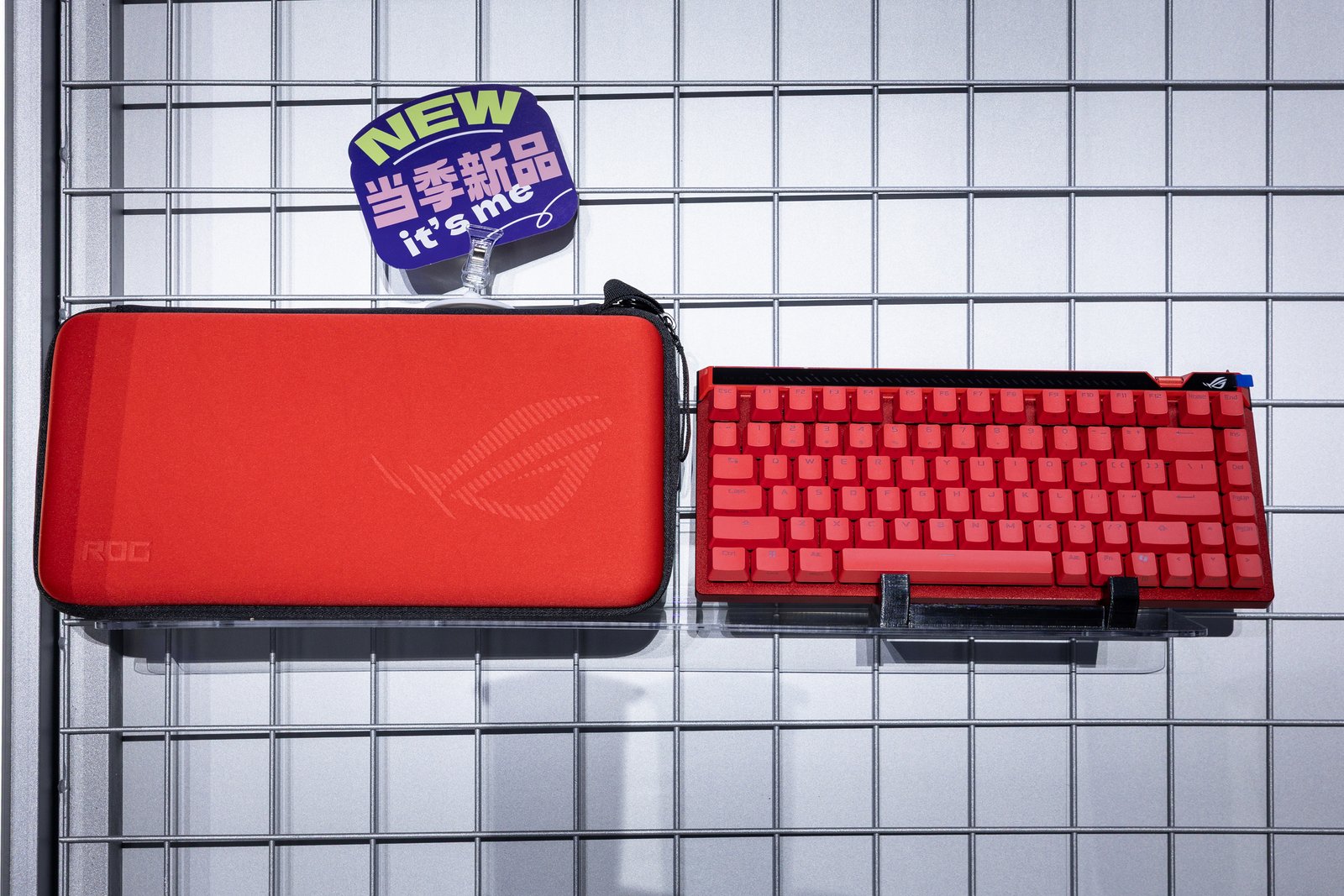
Among peripherals, the new Lava Red colorway of the ROG Gladius Ace 75 HE stood out as the most eye-catching item in the peripherals zone. With its 75% layout, dual variants (ROG HFX V2 and V2X magnetic switches), 8000Hz polling rate, and 0.01mm keystroke detection accuracy, it’s the exact same gear used by CS2 pro team Team Vitality (“The Bees”). The V2 switch version retails at ¥1,199; the V2X at ¥1,249—with pre-orders opening May 15.
In cross-category collaborations, ROG went bolder: partnering with Japanese techwear brand Hamcus on functional workwear pants and T-shirts, and teaming up with elite road bike manufacturer Factor on a full-carbon co-branded road bicycle. Pricing and availability for the latter remain unannounced—but the mere combination of an esports brand and a top-tier road bike is already conversation-worthy on social media.
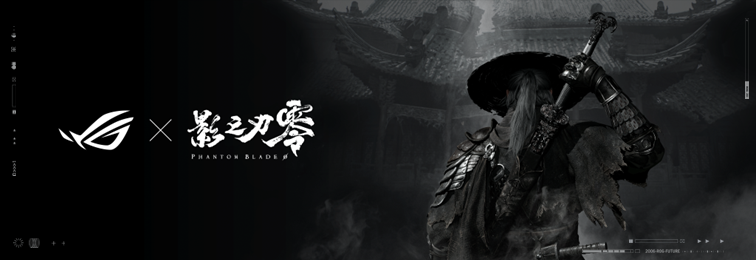
Additionally, ROG officially announced an upcoming collaboration with the highly anticipated domestic AAA martial arts title Shadow Blade Zero, with details to be revealed soon.
Viewed individually, these products almost erase ROG’s brand boundaries—it simultaneously operates as a gaming hardware maker, a streetwear label, a sports brand, and a game co-marketing partner. Whether ROG can execute credibly across each of these domains is the critical question it must now answer.
Final Thoughts
The ROG Strix G10 series reaffirms its position as the industry’s premier performance-tuning authority. The ROG NUC and AR glasses showcase ROG’s foresight into next-generation computing paradigms. And its 20th-anniversary ecosystem initiatives constitute a bold brand experiment. Whether all these moves succeed is secondary—the key takeaway is that ROG refuses to rest comfortably within its comfort zone.
The gaming laptop market genuinely needs a dose of faith—not blind brand worship, but confidence that peak user experiences still hold untapped evolutionary potential.
On this front, ROG has spent two decades proving one thing: When you pursue excellence relentlessly, faith follows naturally.

