
 雷科技
雷科技




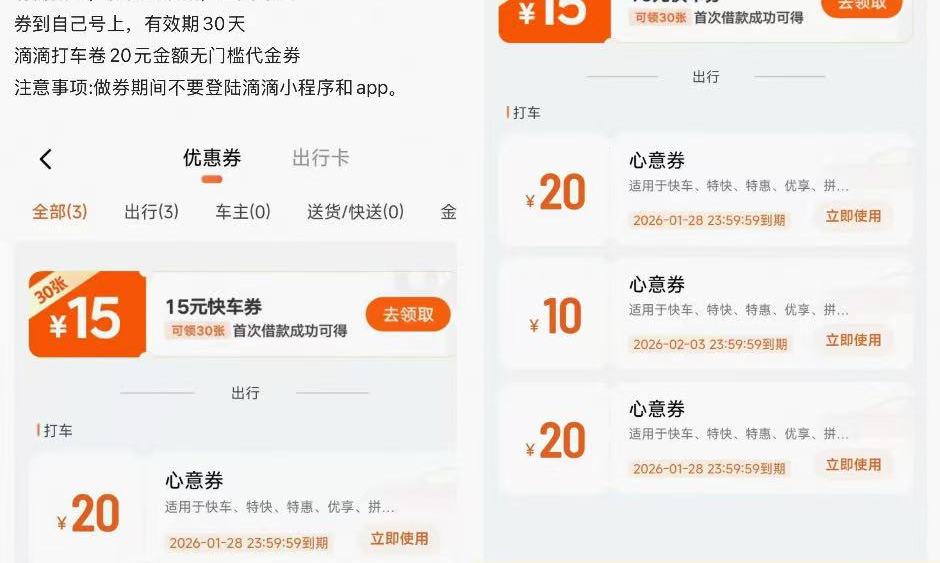

On May 18, San Yan Tech’s investigation revealed that some netizens reported purchasing ride-hailing vouchers on second-hand platforms—vouchers allegedly obtained by sellers who logged into buyers’ accounts and maliciously submitted negative reviews against drivers to extort large-value ride-hailing vouchers from the platform, thereby receiving compensation.
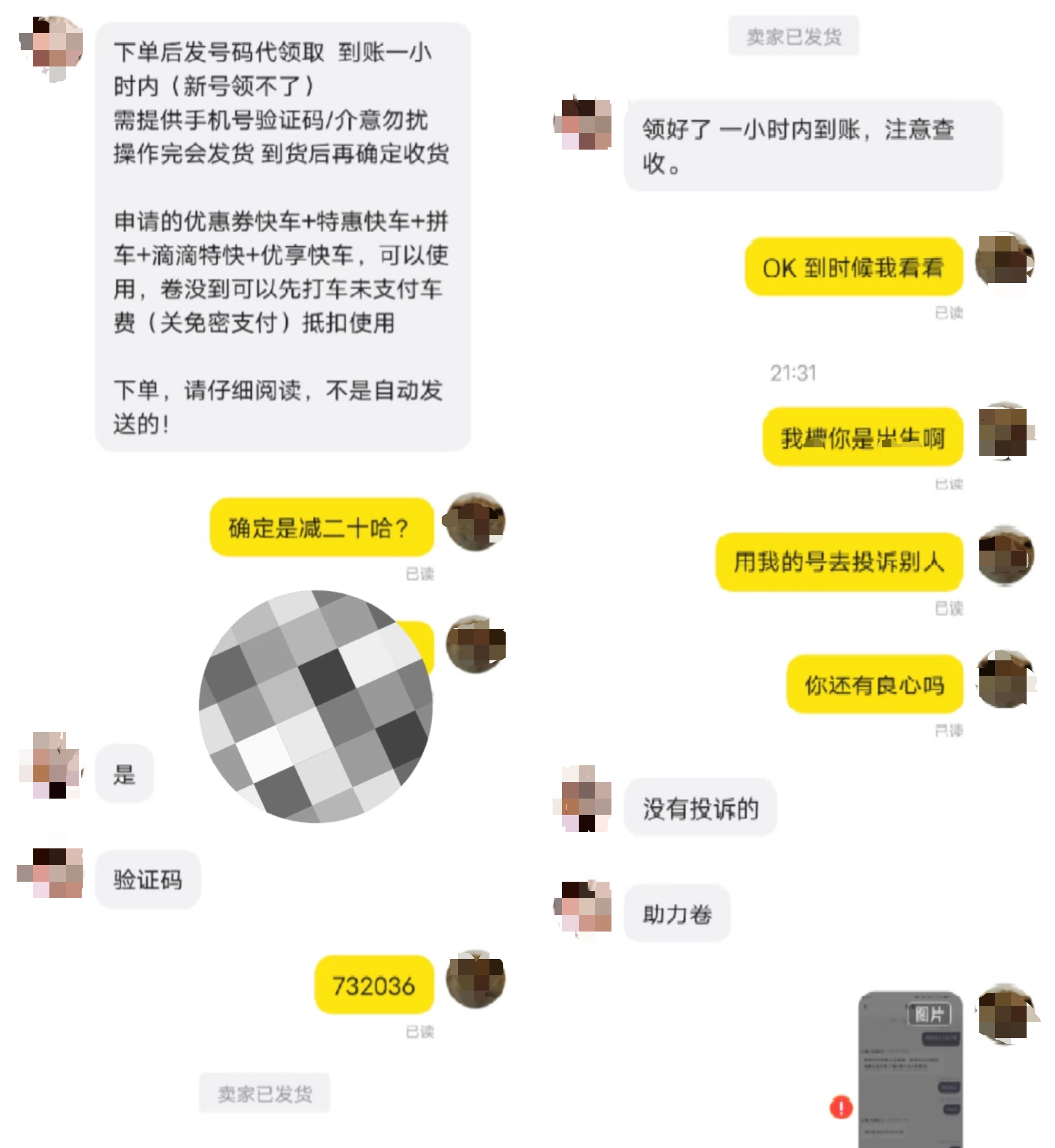
Image source: Xiaohongshu
LeiTech’s “Xiao Lei Bbb” (ID: xiaoleibbb) also searched for “ride-hailing vouchers” and—lo and behold—immediately found numerous listings for “20-yuan no-threshold magic vouchers” and “assistance vouchers,” most priced at 20 yuan but commonly listed for just 6 yuan.
Sellers’ explanations are consistently vague. If you ask how they obtained the vouchers, they’ll mumble a bit—and if you don’t complete the purchase promptly, they’ll instantly block you.
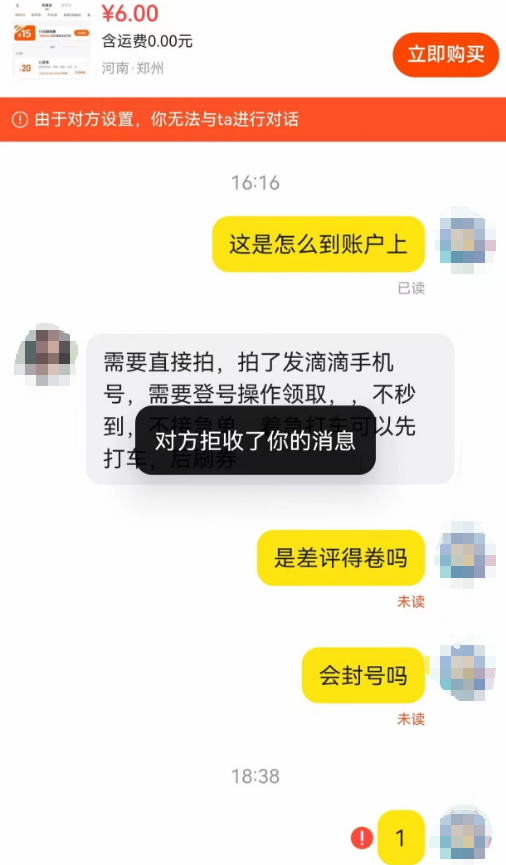
Image source: San Yan Tech
The operational process is straightforward: sellers request your phone number and log into your account using SMS verification codes. They do not place any new ride-hailing orders; instead, they directly review your historical trip records and file complaints with human customer service agents—submitting negative ratings.
No wonder sellers won’t disclose how these vouchers are sourced—they’re afraid you’ll learn the origin is unethical and feel morally conflicted.
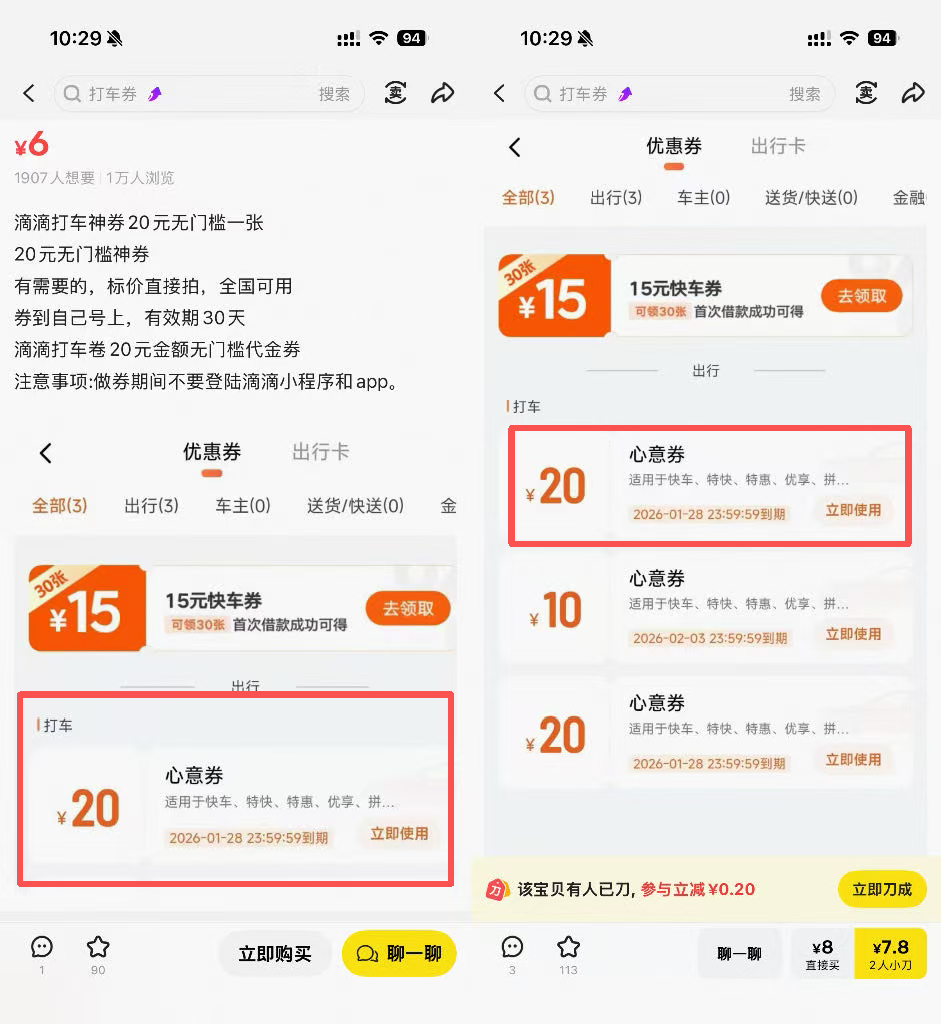
Image source: Xiao Lei screenshot
Within minutes after you log back in, you’ll find an additional “courtesy voucher” in your voucher wallet—the very voucher acquired via complaint-driven demands made to the platform.
Strangely, the platform’s official complaint process explicitly requires complainants to submit verifiable evidence—including on-site photos and trip videos. Yet sellers provide no authentic supporting materials whatsoever—relying solely on fabricated narratives.
Nonetheless, even without any evidentiary support, the platform still issues a 20-yuan courtesy ride-hailing voucher to the implicated account.
Obtaining vouchers based purely on unsubstantiated claims is truly absurd.
Moreover, San Yan Tech discovered that these merchants use nearly identical verbal scripts—repeating phrases like “a stranger entered the vehicle,” “trash left inside the car,” or “the driver verbally abused me”—suggesting the existence of an organized, large-scale gray-market industrial chain.
Xiao Lei Bbb (ID: xiaoleibbb) found that this gray-market activity traces back to 2024—or even earlier.
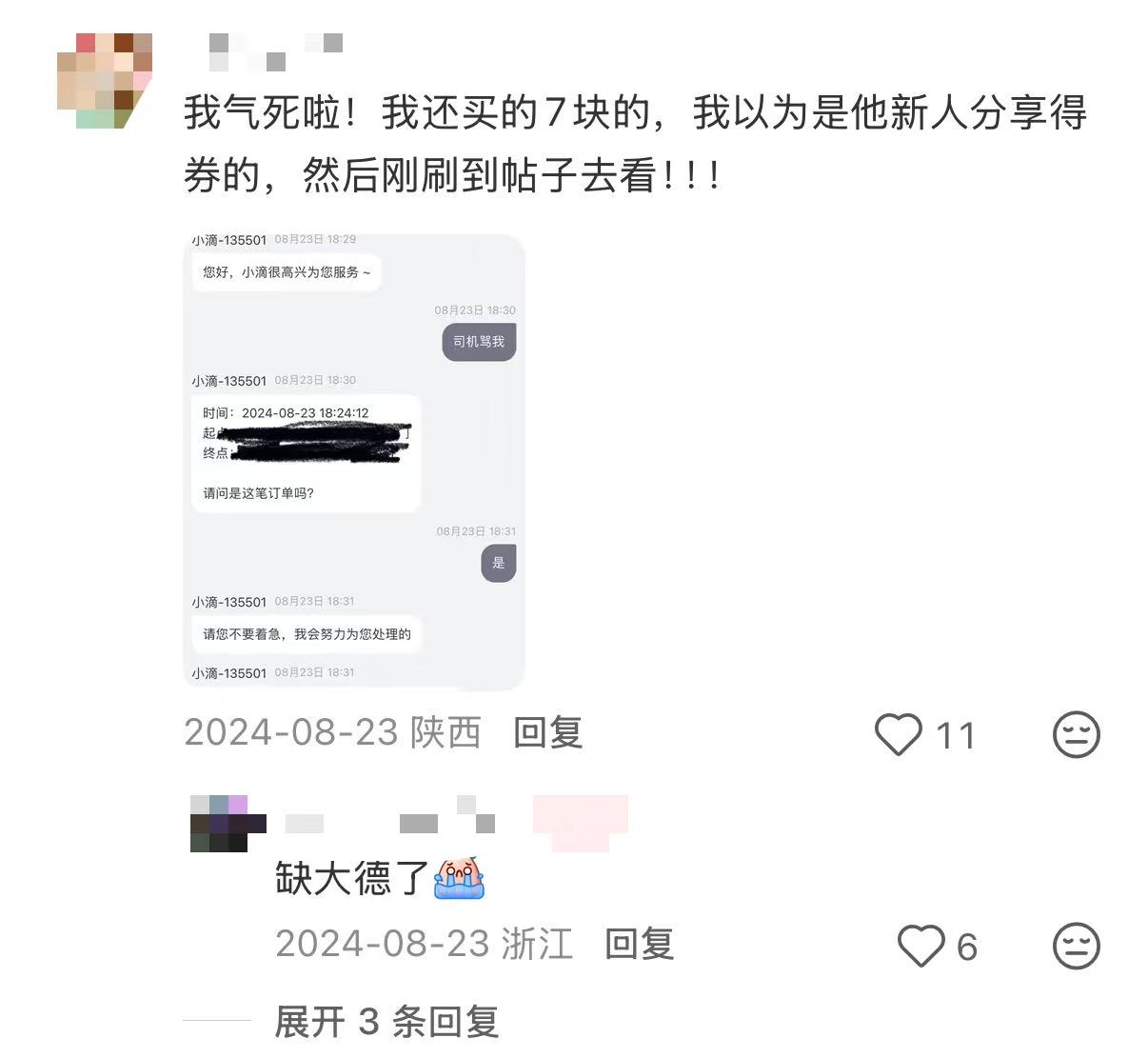
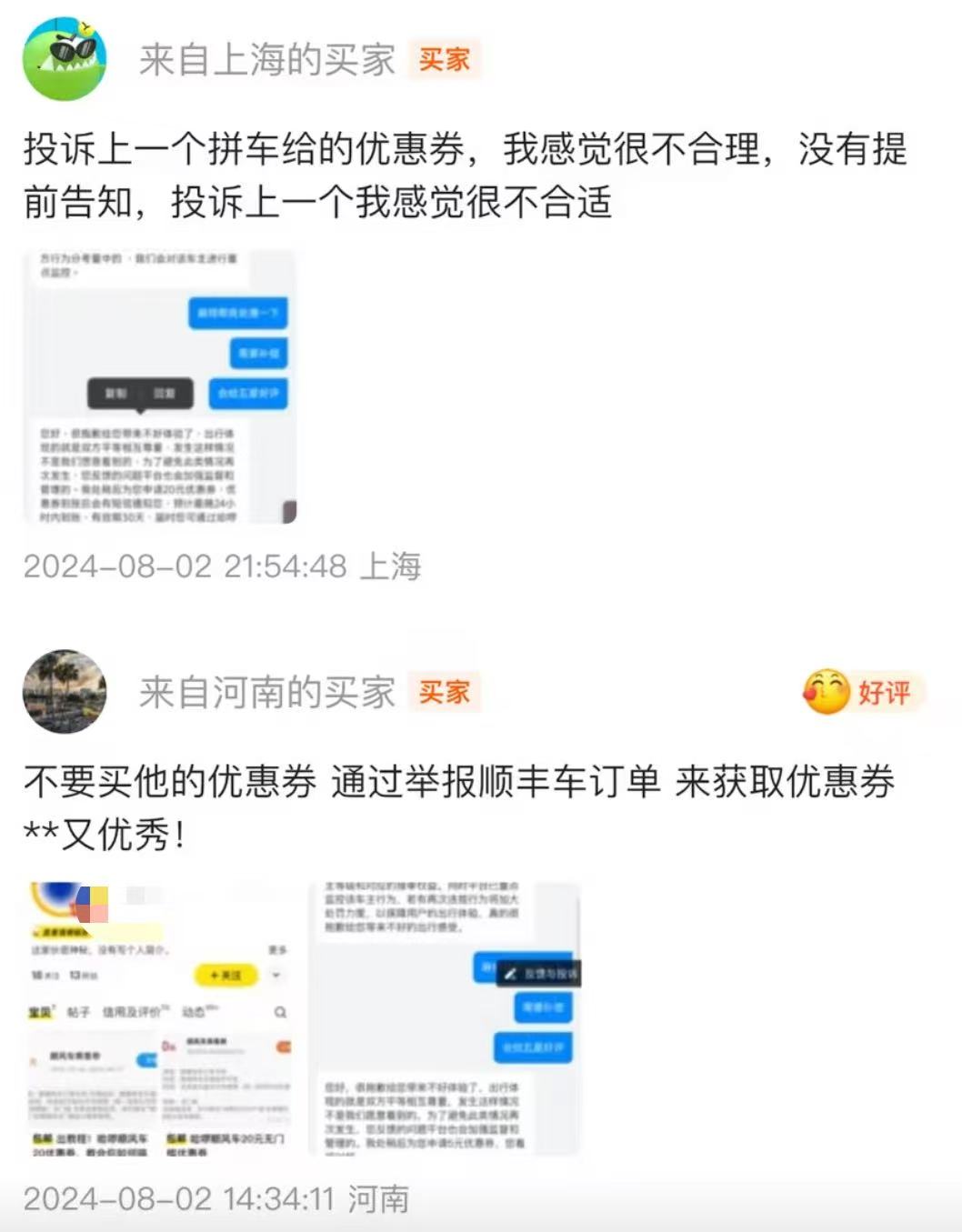
Image source: Xiao Lei screenshot
In this scenario, users profit, sellers profit, and the platform profits too. The only victims are innocent ride-hailing drivers.
Within one to two business days after a complaint is filed, the platform mandates retraining and intensified monitoring for the accused driver. If violations are confirmed, drivers face severe penalties—including service-point deductions, breach-of-contract fines, and temporary suspension of order-acceptance privileges. Essentially working an entire day for zero earnings is considered the mildest consequence.
Xiao Lei consulted an AI assistant and learned that even ordinary verbal abuse can incur fines of several hundred yuan—or result in a one-week order suspension. Penalties are extremely strict. Yet, to appease the “complaining user,” the platform casually issues a compensatory voucher.
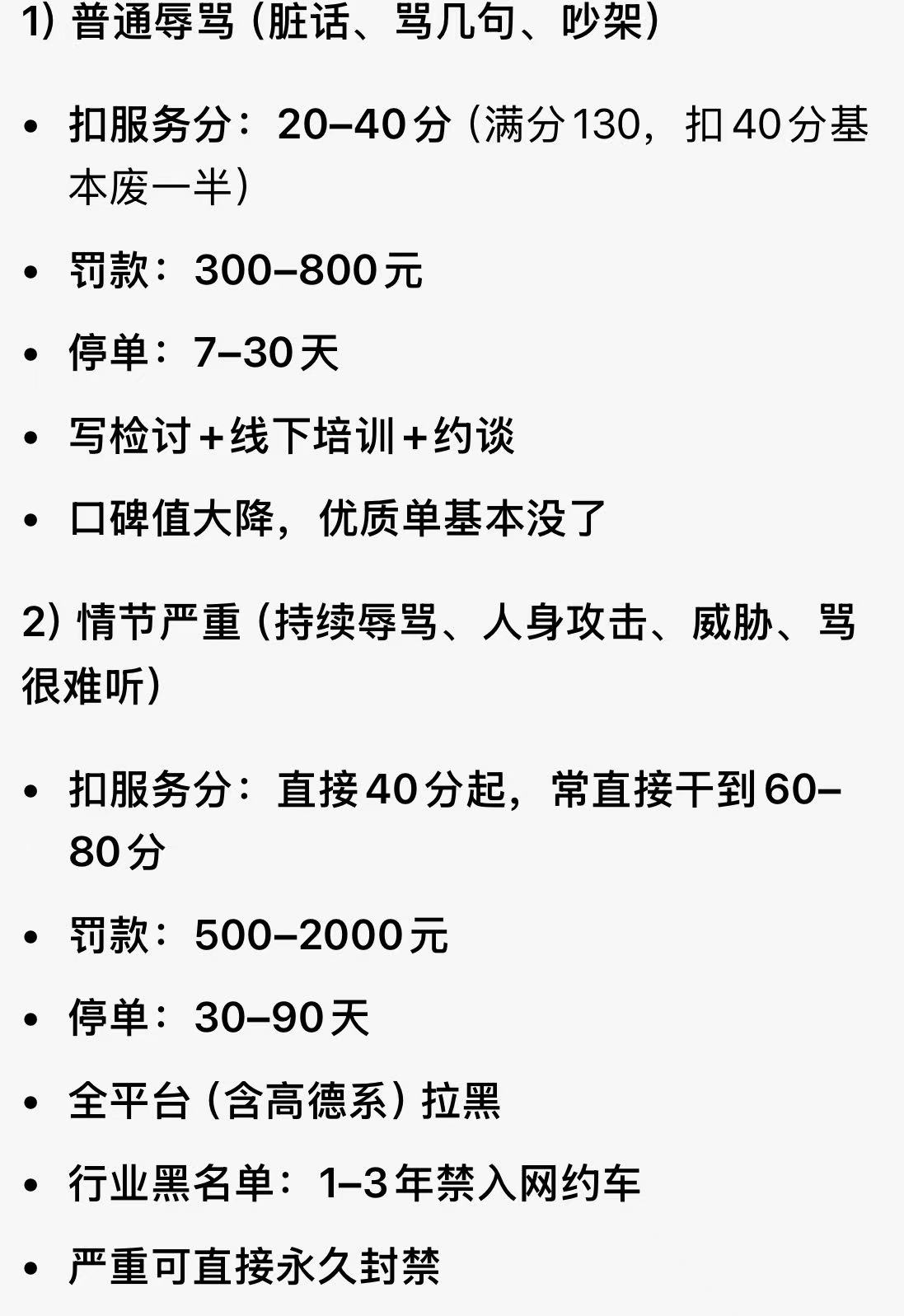
Image source: Doubao AI-generated
In other words, that 20-yuan voucher you bought for just 6 yuan comes at the cost of a driver losing income, being suspended from work, and enduring immense stress.
But this isn’t even the worst part. Some low-cost “proxy ride-hailing” services involve sellers placing orders using virtual phone numbers. Once the ride concludes, the seller simply vanishes without payment—leaving drivers unpaid entirely.

Image source: San Yan Tech
Some might argue: “I’m just buying a voucher—I didn’t personally file the complaint, so what’s it got to do with me?” Xiao Lei offers a timely reminder: You’re absolutely implicated.
By handing over your account credentials—including your phone number and SMS verification codes—you expose yourself to serious risks. The seller could easily misuse them—for example, registering for online loans or orchestrating fraud. When authorities trace those activities back to you, you’ll be left with nowhere to turn.
Furthermore, if the platform detects malicious complaint records associated with your account, consequences range from account suspension to formal liability investigations. Saving a few yuan simply isn’t worth the risk.
Turning to the platform itself:
The complaint-and-compensation mechanism was designed to protect passenger rights—a commendable goal. Yet today, complaints require no evidence and are accepted at face value; compensation vouchers are issued instantly, bypassing even basic verification steps.
In short, this “compensation without evidence” practice effectively greenlights gray-market operations.
In Xiao Lei Bbb’s (ID: xiaoleibbb) view, eliminating this problem is straightforward: raise the complaint threshold, strengthen platform review procedures, and mandate that users submit genuine, verifiable evidence.

