
 雷科技
雷科技





For the past few years, everyone has taken it for granted that robot vacuums are the "future" of floor cleaning. A single machine that sweeps and mops on its own, leaving you free to just kick back and relax — no matter how you look at it, it seems like the product that best fits our needs.
But data released by AVC (All View Cloud) tells a different story. In the first half of this year, robot vacuum retail sales reached 9.8 billion yuan, down 4.0% year-on-year, with retail volume at 3.09 million units, down 4.6%. In the same period, floor washer retail volume hit 4.49 million units, up 14.5% year-on-year, overtaking robot vacuums in shipments for the first time. So why have floor washers managed to pull off this upset against robot vacuums? Here's what Leitech (ID: leitech) has to say.
Beyond convenience, floor washers also clean better
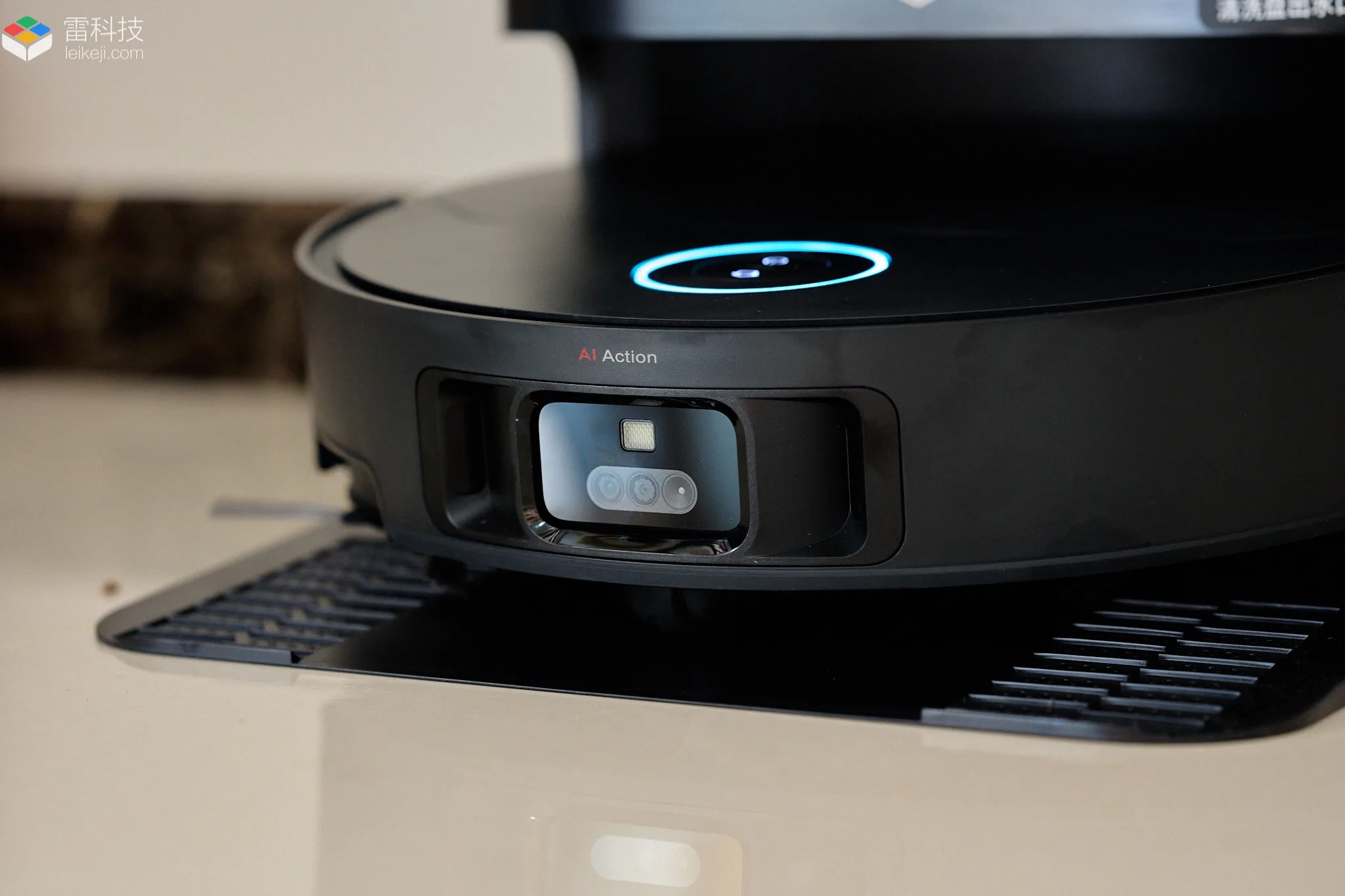
What do users prioritize before buying an intelligent cleaning device? First and foremost, effort saved. The vast majority of consumers buy a robot vacuum because they want it to thoroughly clean the home with no human intervention — and after finishing the job, it can even "wash itself," which fits right into our vision of a futuristic tech-enabled life.
(Image source: LeiTech)
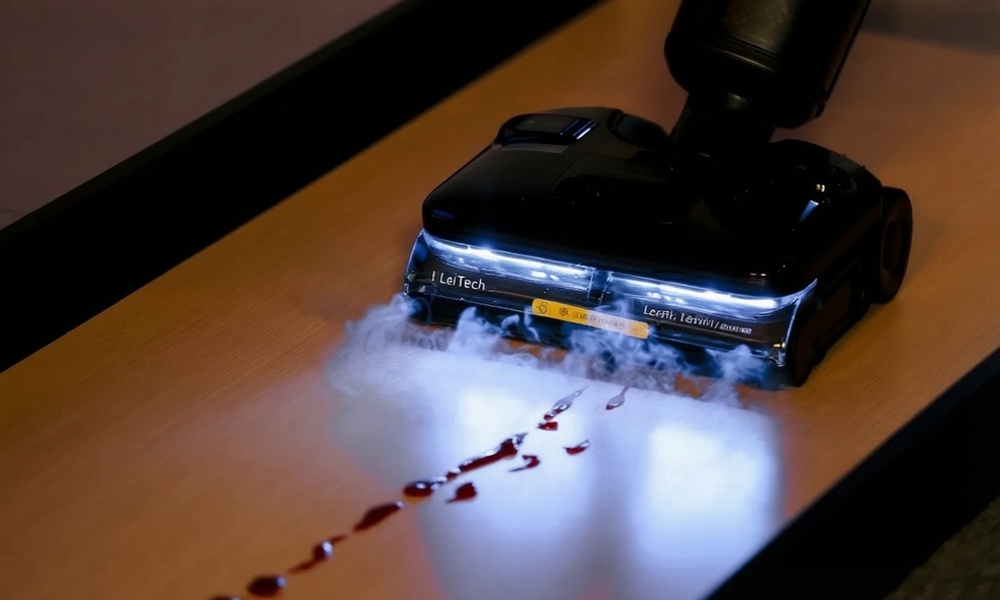
The second advantage is cleanliness. Grease on the kitchen floor, juice a kid accidentally spills, muddy paw prints left by a pet — these are actually quite a challenge for robot vacuums, because their suction power and downward pressure lag well behind those of floor washers. Xiaolei actually keeps both machines at home: the robot vacuum handles every area outside the kitchen, while the floor washer is dedicated to the kitchen. In other words, when it comes to heavy-duty grease scenarios, the robot vacuum performs only so-so — or rather, it simply wasn't designed for this scenario in the first place.
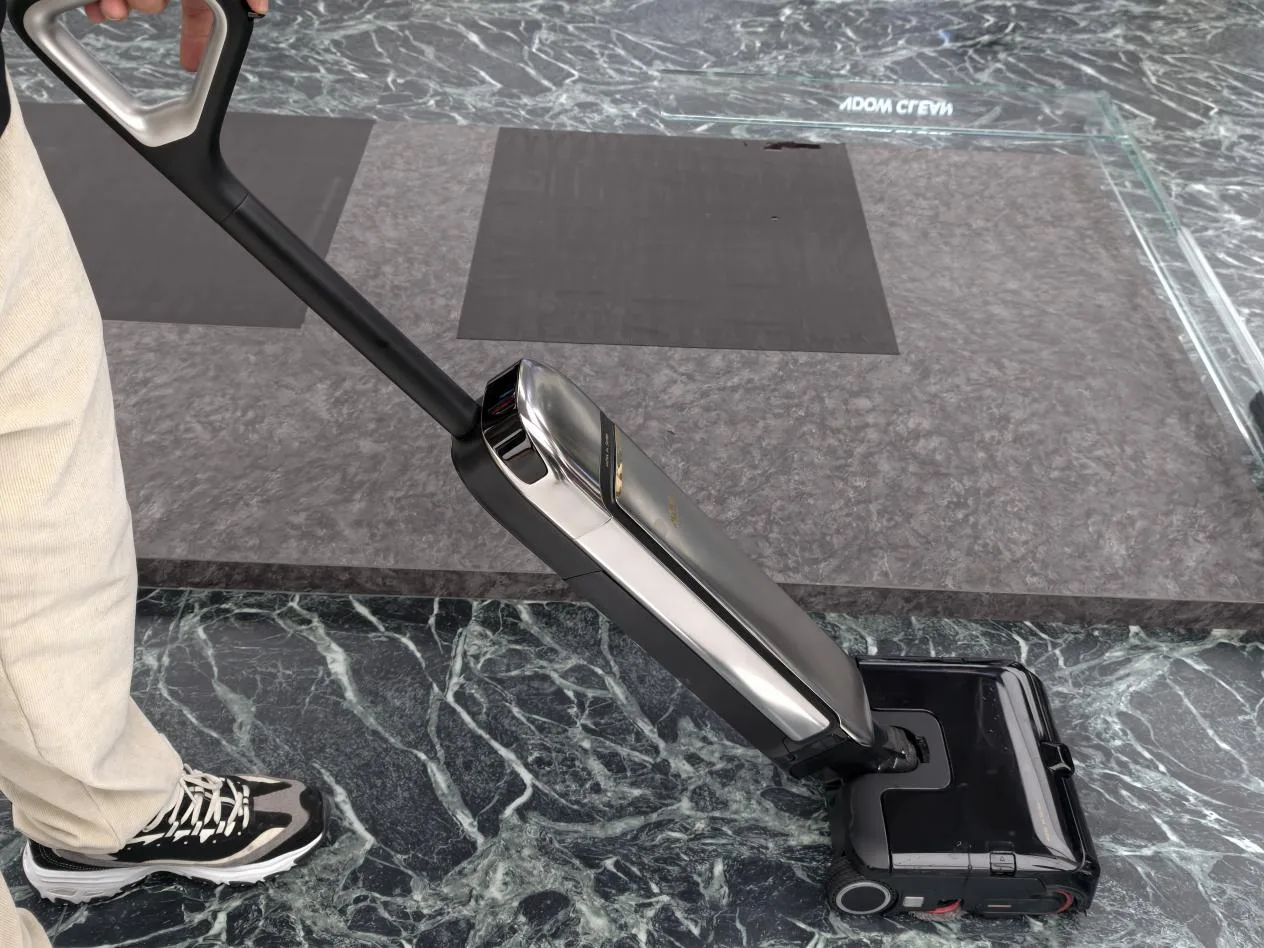
And that's exactly the weakness floor washers make up for. Granted, they're not very "smart" — you have to push them around, and they can't clean on their own while you're away from home. But their cleaning power far surpasses robot vacuums: greater downward pressure, wider coverage, and the ability to self-clean at the same time as it cleans the floor. A job that might take a robot vacuum two or three passes to finish, a floor washer can knock out in a single go.
(Image source: LeiTech)
Robot vacuums sold so well in previous years because they hit the most universal need of all: laziness. But as the first wave of users actually lived with them, they found the machine couldn't reach under the bed, left dust in corners, and couldn't scrub away stubborn stains. That "wait, it's not really fully automatic after all" sense of letdown gradually piled up. That's when floor washers stepped in to fill the gap with "grab-and-go, wipe-it-clean" capability — and demand naturally shifted over.
So the positioning of these two categories was complementary from the very start: the robot vacuum solves "I don't want to sweep," while the floor washer solves "I want it properly clean." Users' standards for cleanliness have been rising all along — from "get a machine to do the sweeping for me" to "what I actually want is genuinely clean." That's the real reason behind floor washer sales climbing nonstop.
It's not that robot vacuums have gone bad — it's that users' demand for "clean" keeps getting higher.
Of course, there's an even more important reason: price. A decent robot vacuum starts at three to four thousand yuan, and flagship models with self-cleaning and dust-collection features can run as high as five or six thousand. For young people just starting out in their careers, that's simply not money they can easily spare.
Floor washers, by contrast, are far more affordable. Mainstream models can be had for just over a thousand yuan, and around two thousand gets you a top-tier unit with steam and self-cleaning. With the same budget, buying a "grab-and-go, wipe-it-clean" floor washer is far more realistic for young users than gritting their teeth and splurging on a robot vacuum. No matter how strong a robot vacuum's cleaning ability is, its price tag alone puts it out of reach for many young buyers, and demand naturally flows over to floor washers.
So the floor washer's overtake boils down to two reasons: robot vacuums left a gap on "cleanliness" and set a barrier on "price." Young people want things wiped clean, yet can't afford the robot vacuum's price tag — and the floor washer happens to hit both points.
"Steam" and "Automation" become floor washers' new selling points
Of course, floor washers selling better and better is inseparable from their evolution in recent years.
The most visible development is certainly the spread of steam mopping. According to AVC data, online retail sales of steam floor washers grew 170.9% year-on-year in the first half of the year, accounting for 19.2% of the online floor washer market, up 12 percentage points year-on-year. That growth rate ranks first across the entire cleaning appliance category.
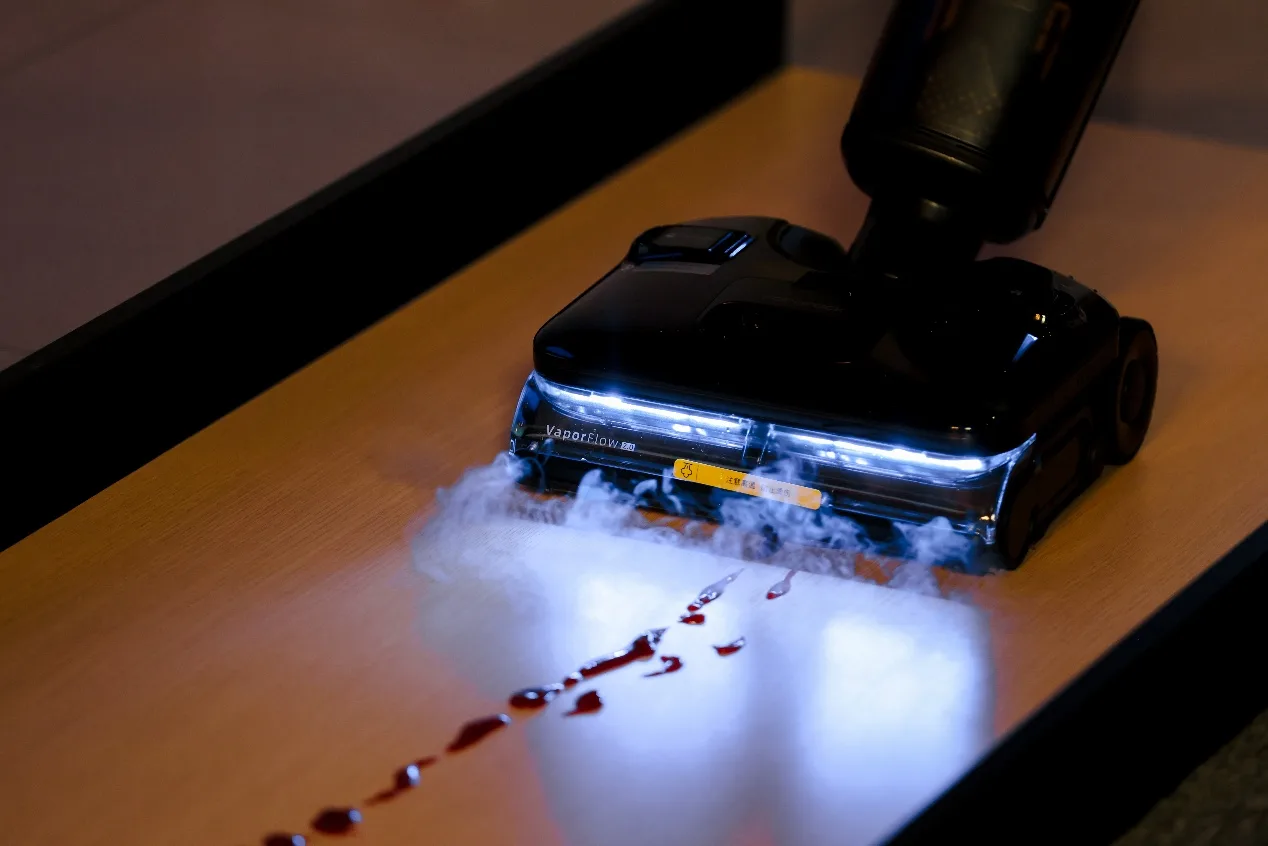
So why has steam become the "standard" feature of floor washers? The reason is simple: traditional floor washers rely on water and the physical friction of the roller to remove dirt, so when they hit dried-on grease or caked-on grime, you have to go back and forth several times. Steam's high temperature softens stubborn stains and adds a layer of physical disinfection on top — for households with babies or pets, it brings an extra peace of mind about "hygiene."
(Image source: Roborock official)
That's why this year, Roborock, Dreame, and Ecovacs are all rolling out floor washers with steam features almost in unison. Among them, the Roborock A30 Pro Steam 3.0 pairs 180°C super steam with 90°C hot water in a one-touch mixed wash; Dreame's steam models focus on 180°C high-temperature disinfection, positioning steam as the nemesis of kitchen grease. Steam is rapidly evolving from a niche selling point into a unified iteration direction for the entire category.
The Berlin IFA, which opened on September 4, has pushed the heat on this front even further. This year, Roborock is set to debut a brand-new steam cleaning technology at the show, while Dreame is also making 180°C steam the headline feature of its launch, backed by a certification from Euromonitor International. The fact that two smart-cleaning giants are betting on steam on the same show floor says it all: steam is no longer a spur-of-the-moment gimmick — it's the next-generation direction manufacturers have set their sights on.
That said, Xiaolei also believes that while steam is great, it inevitably brings certain drawbacks. For starters, for a machine to output 180°C steam, it has to spend time preheating first, consumes more power than regular models, and the limescale and residue left in the water tank and pipes are harder to clean. What's more, steam floor washing will most likely eventually replay the old "roller war": first they compete on temperature, then on certifications, and finally on piling up specs.
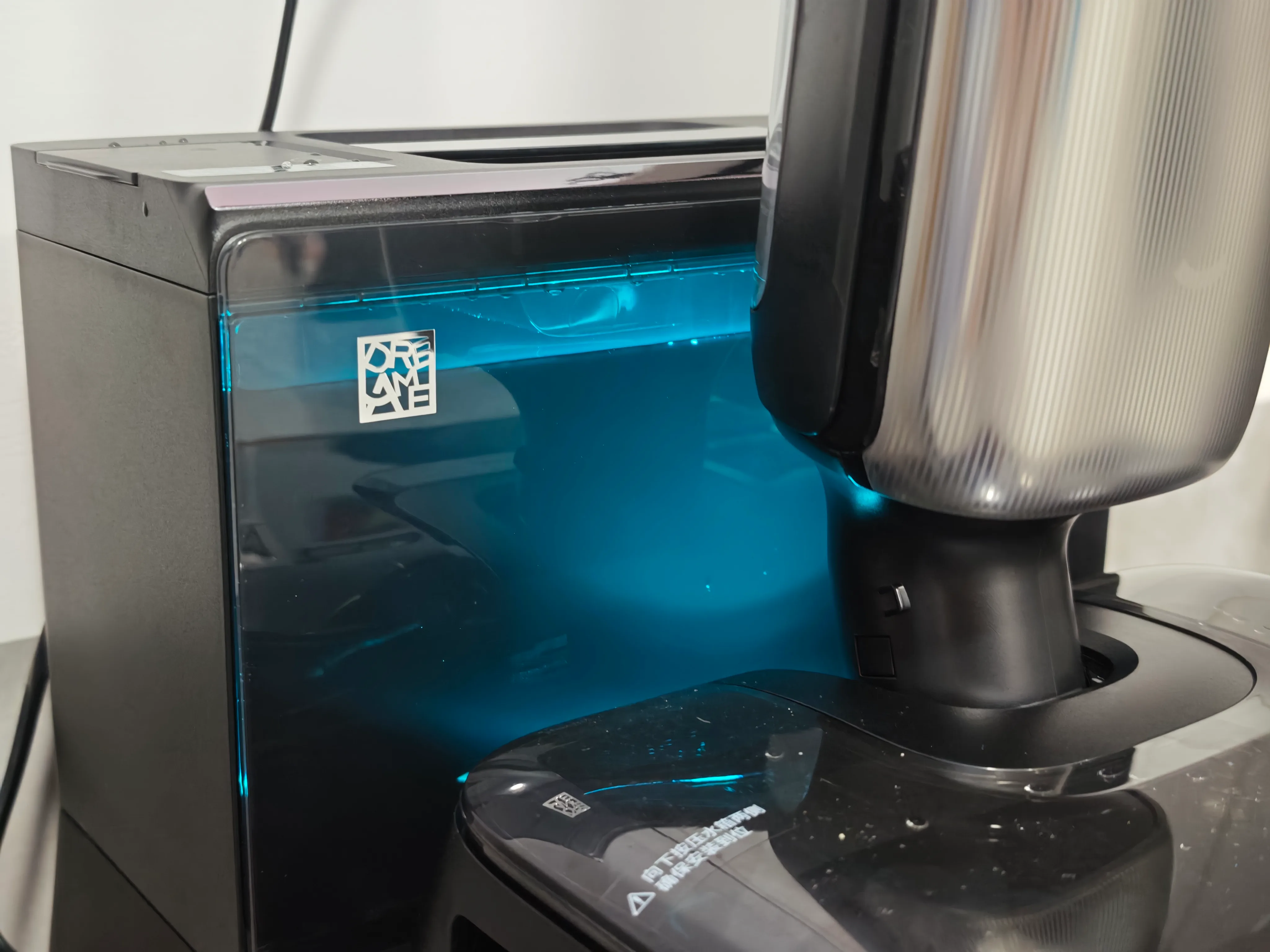
The second upgrade point is automatic water inlet and drainage. It sounds like a small improvement, but for users it solves a long-standing pain point of floor washers: changing the water. With tank-based models, you have to empty the dirty water and refill the clean water after just a few mopping sessions, and you still need to rinse the roller when you're done. Go through the whole routine and you've actually saved yourself very little effort. Automatic water inlet and drainage eliminates the "water changing" step entirely, and the barrier to using the machine drops dramatically.
(Image source: LeiTech)
In the first half of the year, automatic water inlet and drainage products saw their retail sales share rise by 7.5 percentage points year-on-year, and Tineco's auto water inlet/drainage series once reached as much as 86% market share across all platforms during the 618 shopping festival. Once the last hassle of "changing the water" is resolved, the floor washer shifts from being "a tool that needs to be taken care of" into something more like "a home appliance that's simply easier to use."
Of course, automatic water inlet and drainage isn't without its barriers. It requires reserving positions for the water inlet and drainage connections, which is a bit troublesome for renters or households in older homes. But for families that can accommodate it, this step genuinely solves the biggest problem floor washers currently face.
The direction of floor washer evolution over the past two years has been consistent: they're finding ways to require less and less human intervention. Steam solves "wiping cleaner," and automatic water inlet and drainage solves "using more effortlessly." Once a category starts moving toward "lowering the barrier to use," its user base naturally keeps growing.
Domestic market saturated, smart cleaning accelerates overseas expansion
By the way, AVC data shows that in the first half of the year, the cleaning appliance industry as a whole shipped 17.31 million units, up 3.7% year-on-year, while sales revenue reached 22.7 billion yuan, down slightly by 0.7% year-on-year. In other words, the domestic price war has escalated to the point where manufacturers are starting to do business at a loss.
(Image source: LeiTech IFA Reporting Team on-site)
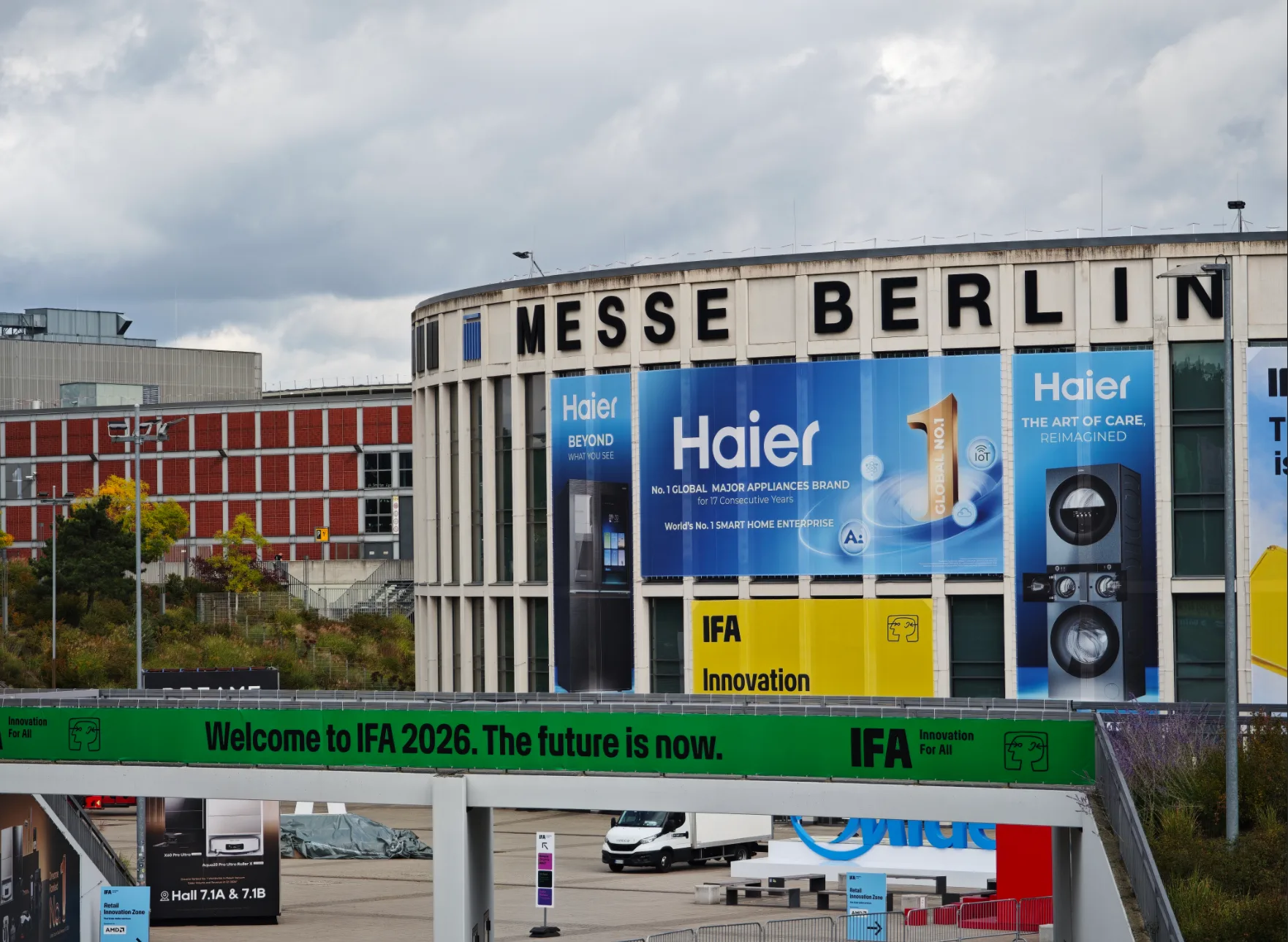
So these manufacturers have all started heading in the same direction: going overseas. Europe is the second-largest robot vacuum market after North America, which makes this year's IFA the best observation window. The Leitech IFA exploration team has already arrived in Berlin to gear up for its IFA coverage. While scouting the IFA venue, the team noticed that the billboards outside the exhibition halls have essentially all been snapped up by domestic (Chinese) manufacturers — Dreame in particular has directly taken over the billboards of a large hall. It's not hard to see that smart cleaning remains a centerpiece of this year's IFA.

(Image source: LeiTech IFA Reporting Team on-site)
And at this upcoming IFA 2026, Roborock, Dreame, and Ecovacs are nearly all showing up in full force — and what they've brought this time is bigger than in past years. Besides its steam floor washer, Roborock has also brought the G-Rover, the wheeled-legged robot vacuum that made its debut at CES earlier this year, over to Berlin. Thanks to its "wheel + leg" structure, the machine can climb stairs and traverse complex terrain, taking the robot vacuum from "flat surfaces" into "three-dimensional" cleaning. Dreame, meanwhile, has lined up over a hundred products spanning 16 categories in one go. The most eye-catching is the Cyber X, a six-legged stair-climbing machine capable of handling slopes up to 42°, extending cleaning from a single floor to multi-story homes. It has also unveiled the X60 Pro with an ultra-slim 8.9cm body, purpose-built for low and cramped spaces.

(Image source: Dreame official)
Ecovacs, meanwhile, has set its theme directly as "From Indoor to Outdoor." Besides its Deebot robot vacuums, it has also brought its "yard-cleaning" lineup — the GOAT robotic lawn mower and the ULTRAMARINE pool robot — to Europe.
(Image source: LeiTech IFA Reporting Team on-site)
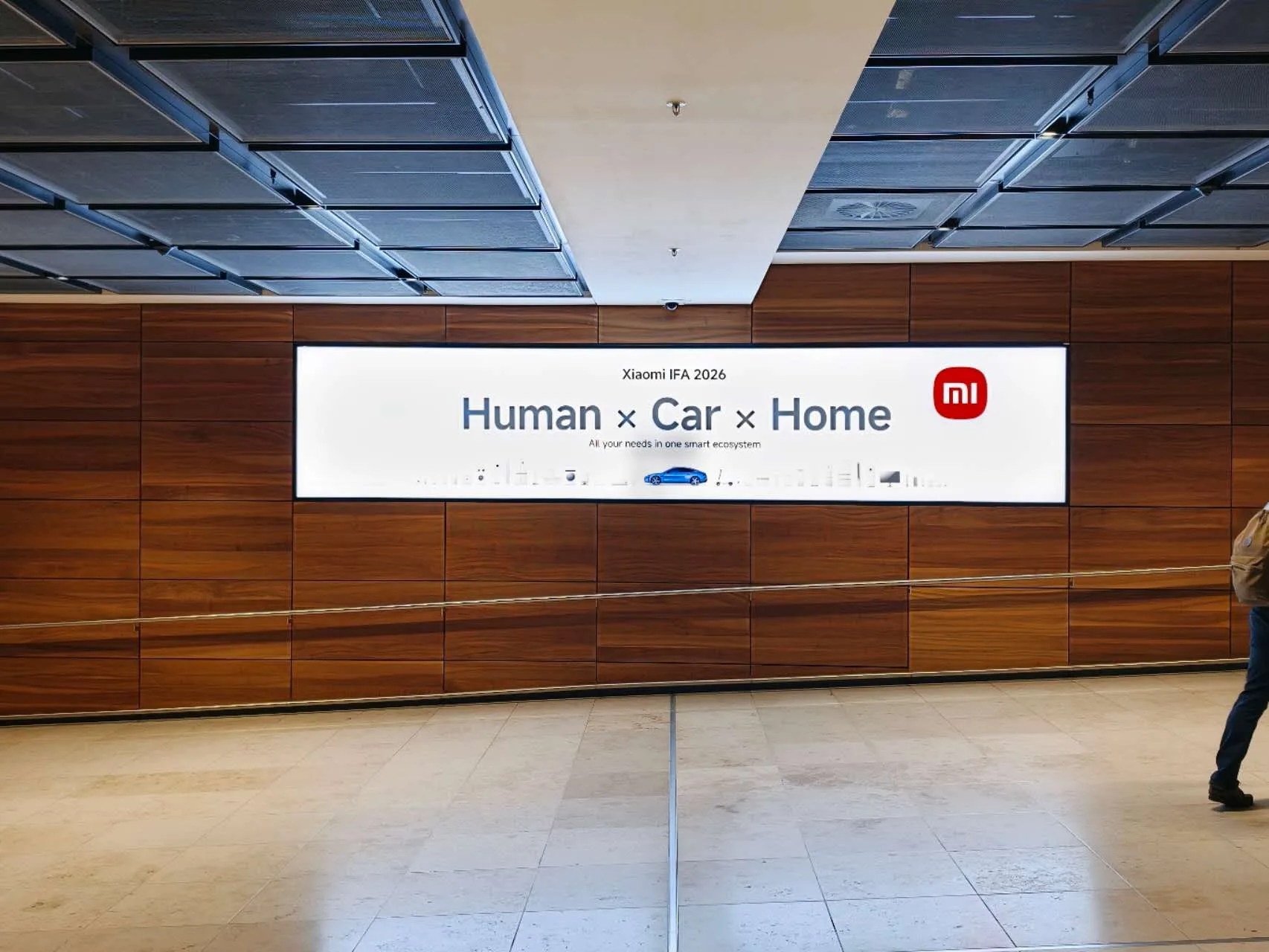
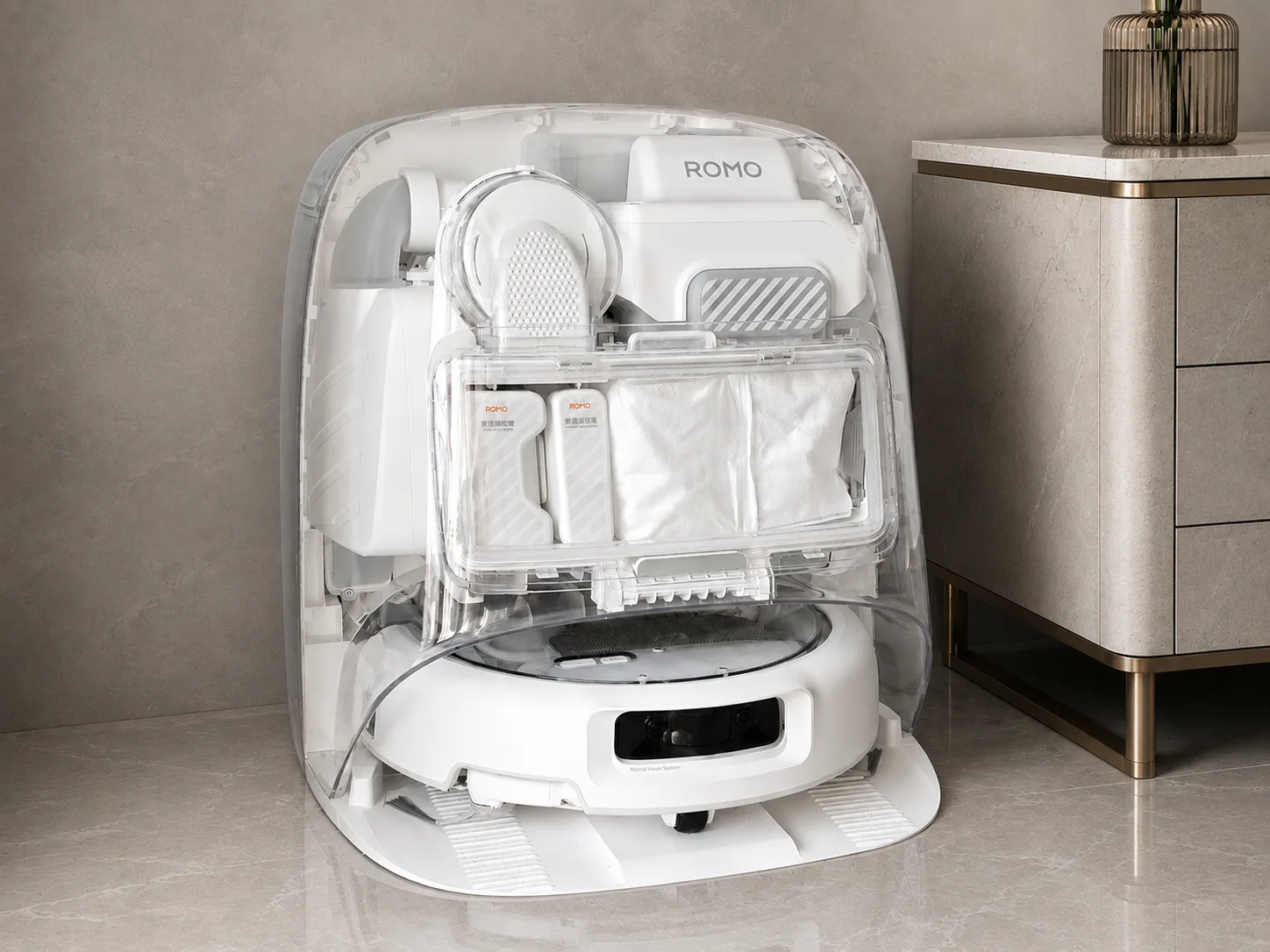
Interestingly, the Leitech IFA reporting team also spotted a new face on the show floor in Berlin: Xiaomi. Making its first appearance at IFA, Xiaomi has slotted its robot vacuum into its sprawling "Human-Car-Home full ecosystem" booth. Meanwhile, DJI's second-generation sweeping-and-mopping robot, the ROMO 2, has also chosen IFA for its overseas debut. And Uwant, a mid-tier brand that built its name on vacuum cleaners, is charging into Europe with just one floor washer and one vacuum cleaner as its vanguard.

(Image source: LeiTech IFA Reporting Team on-site)
You might also want to keep an eye on the upcoming frontline coverage from the Leitech IFA reporting team. Xiaolei also believes that this year's IFA will bring us even more surprises from domestic manufacturers.
Is "sweep-wash division of labor" becoming the standard for whole-home cleaning?
With all that said, we can finally answer the question posed at the beginning.
Neither the robot vacuum nor the floor washer has replaced the other — instead, they've divided the work of whole-home cleaning between them: one retains the advantage of being "fully automatic," while the other goes deep on "deep cleaning." What users have always wanted was never "which machine is more versatile" — what they truly care about is "is my home's floor being cleaned cleanly enough."
The future answer for floor cleaning most likely won't be a single more powerful machine that rules them all. It will settle into a division of labor: everyday dust and debris go to the robot vacuum for hands-off handling, while localized stubborn stains, kitchen grease, and pet marks go to the floor washer for on-demand touch-ups. Each does what it does best.
For manufacturers, this is also a reminder. A few years ago, everyone loved to talk about "one machine handles the whole home," but the first-half data has already given its answer: compared to a do-everything jack-of-all-trades that does nothing thoroughly, users are more willing to pay for equipment that does one thing to the extreme.
The floor washer's overtake isn't a bad thing — on the contrary, it's a sign that this market is starting to mature. The real show is where these two paths each head from here. What everyone is actually competing for is the same thing: how to make floor cleaning more effortless while genuinely getting the floor wiped clean.
From September 4–8, the world’s largest consumer electronics and home appliance trade show—IFA 2026—will take place in Berlin.
As the “most authoritative new media outlet covering IFA” globally—with AI technologies earning unanimous acclaim—LeiTech is deploying its largest-ever, highest-specification reporting team to Berlin. Using a “2+N” model (two live hosts + multiple on-site editors + multiple backend editors), LeiTech will deliver immersive, multi-dimensional, real-time coverage of IFA 2026—focusing on AI Agent integration with home appliances and hardware, robotics technologies applied to home scenarios, emerging digital lifestyle trends across human-vehicle-home ecosystems, and Chinese brands’ global stage presence.
The LeiTech IFA 2026 Reporting Team arrived in Berlin on September 3 to begin preliminary coverage—stay tuned!